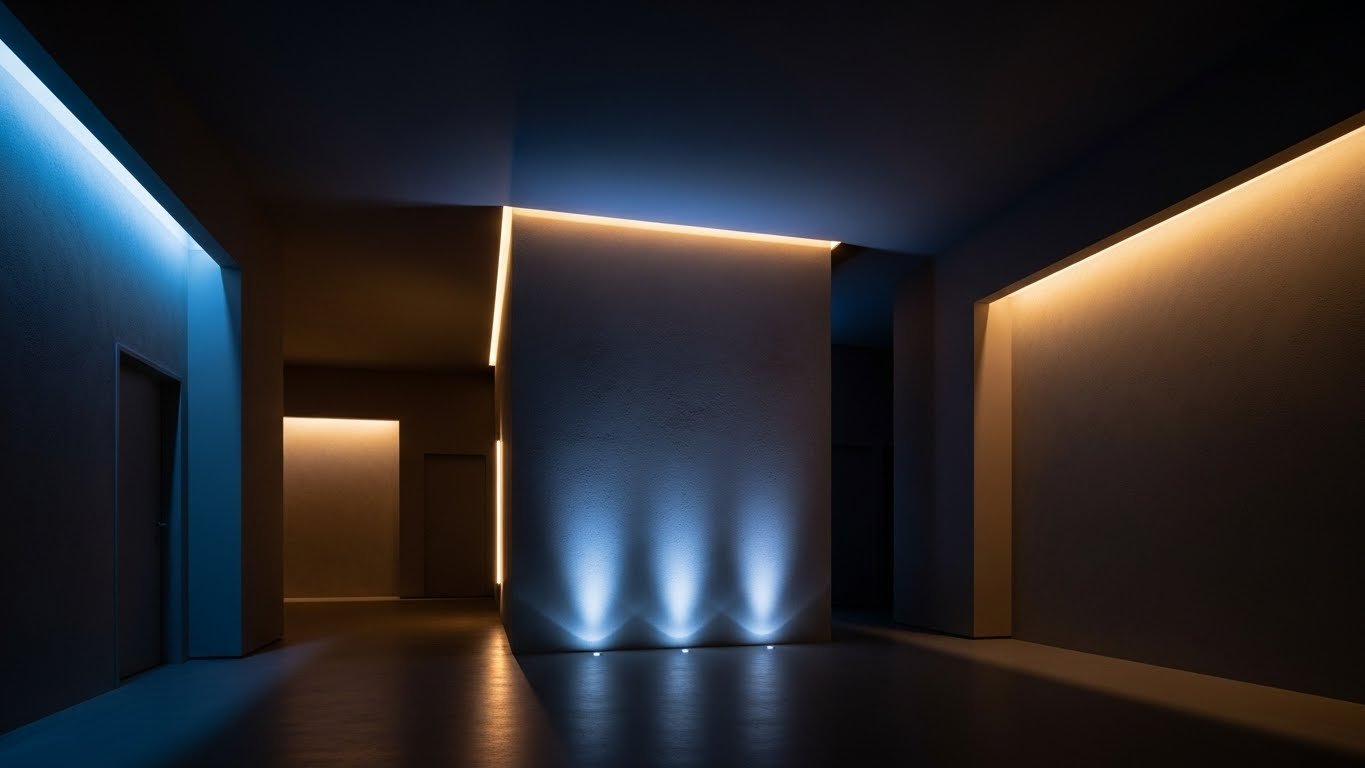
Lighting isn’t just illumination; it’s an architectural language that transforms spaces from ordinary to extraordinary. You’ll discover how strategic light placement can dramatically reshape your environment, creating depth, mood, and visual narrative. Whether you’re an architect, designer, or homeowner seeking to reimagine your space, these 26 ambient lighting concepts will challenge your perception of illumination as a mere functional element. Are you ready to see how light can become your most powerful design tool?
Foundations of Layered Lighting Design

Although layered lighting is a fundamental approach in architectural illumination, it’s more than just placing fixtures randomly throughout a space. Thoughtful layered strategies integrate ambient, task, and accent lighting, creating depth and visual dynamism. By understanding key design principles, you’ll transform environments with strategic illumination that enhances architectural features and spatial perception.
Understanding Light as an Architectural Element

Light transcends mere illumination, functioning as a dynamic architectural material that sculpts spatial experiences and emotional landscapes.
You’ll discover how light perception transforms environments, creating depth, texture, and atmosphere.
Natural Light Integration Strategies
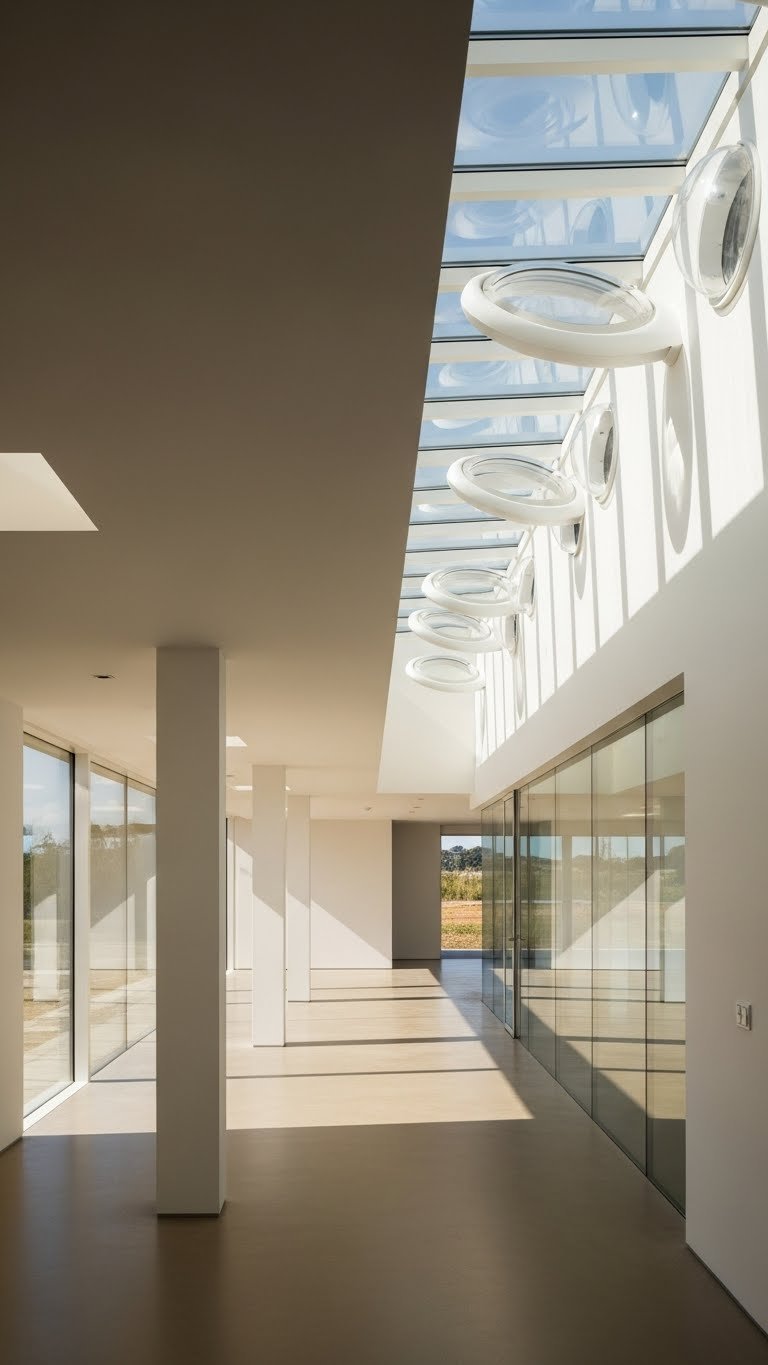
When architects harness daylight as a primary design medium, they transform spaces from mere functional enclosures into dynamic, responsive environments. Solar tube skylights and light diffusing materials enable you to strategically channel natural illumination, creating seamless shifts between indoor and outdoor spatial experiences while maximizing architectural transparency and luminous quality.
Recessed Lighting: Precision and Subtlety
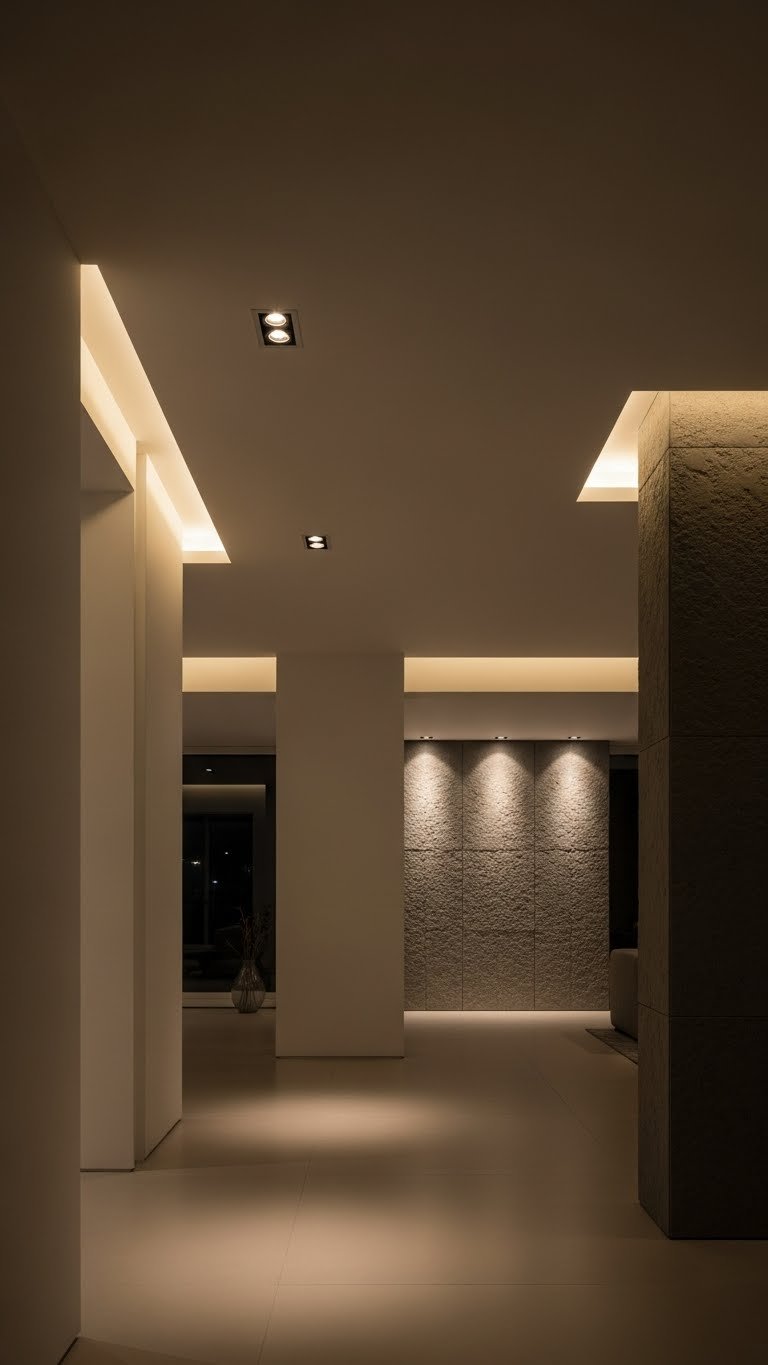
Architectural subtlety emerges through recessed lighting’s understated precision, transforming interior spaces into choreographed visual experiences. You’ll discover design flexibility with contemporary LED fixtures that offer energy efficiency and seamless installation techniques. Decorative trims and advanced dimming options enhance aesthetic appeal, strategically illuminating surfaces while maintaining technical sophistication and spatial enhancement.
Directional Lighting for Spatial Definition
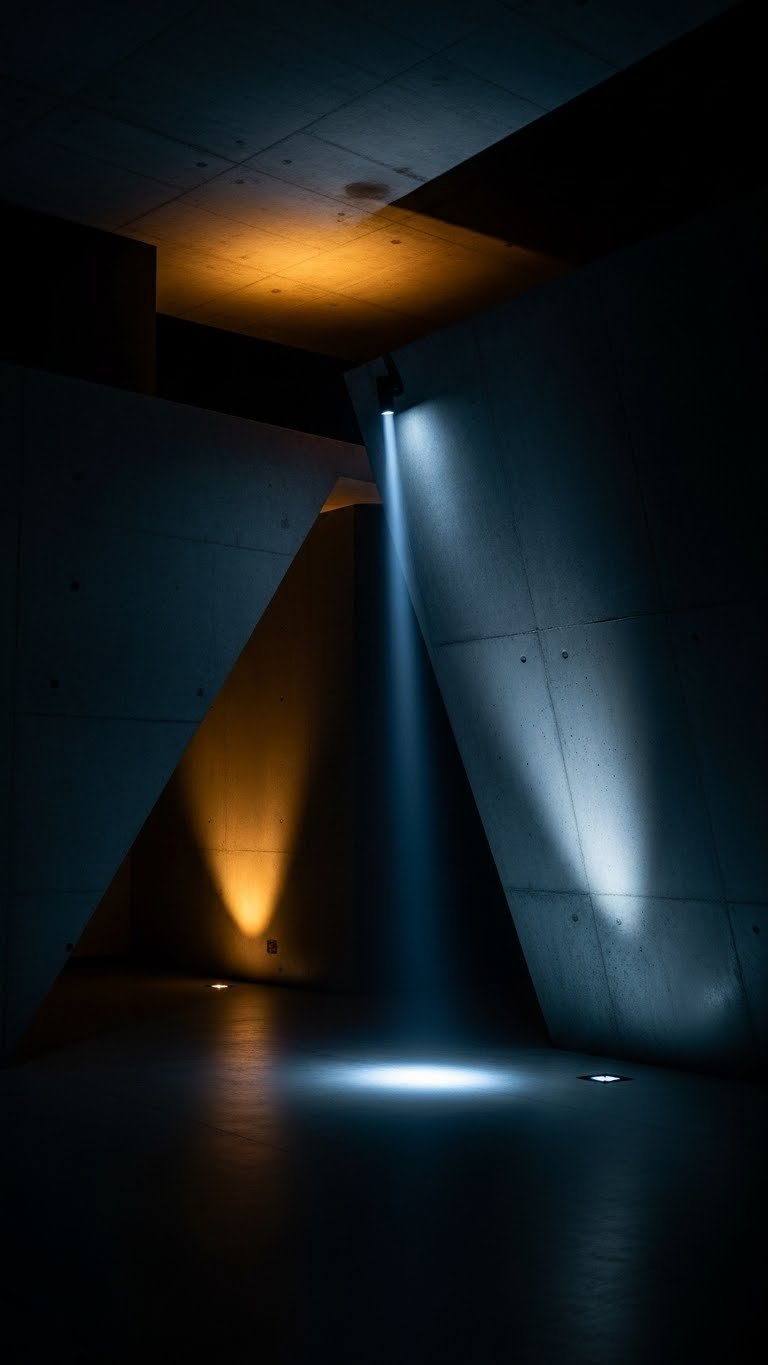
Although spatial perception hinges on visual cues, directional lighting transforms environments by sculpting dimensionality through strategic illumination techniques. You’ll harness light direction to create dynamic shadow play, defining architectural volumes and guiding visual movement. Precise angles and controlled beam spreads carve spaces, revealing depth and texture with intentional luminous choreography.
Accent Lighting: Highlighting Architectural Features

Strategic accent lighting transforms spaces by selectively illuminating key architectural elements, creating visual focal points that dramatize design nuances and structural character.
You’ll leverage shadow play and texture accent techniques to highlight unique features like exposed brick walls, sculptural columns, or intricate ceiling details, guiding viewers’ visual perception with precisely positioned light.
Smart Lighting Control Systems
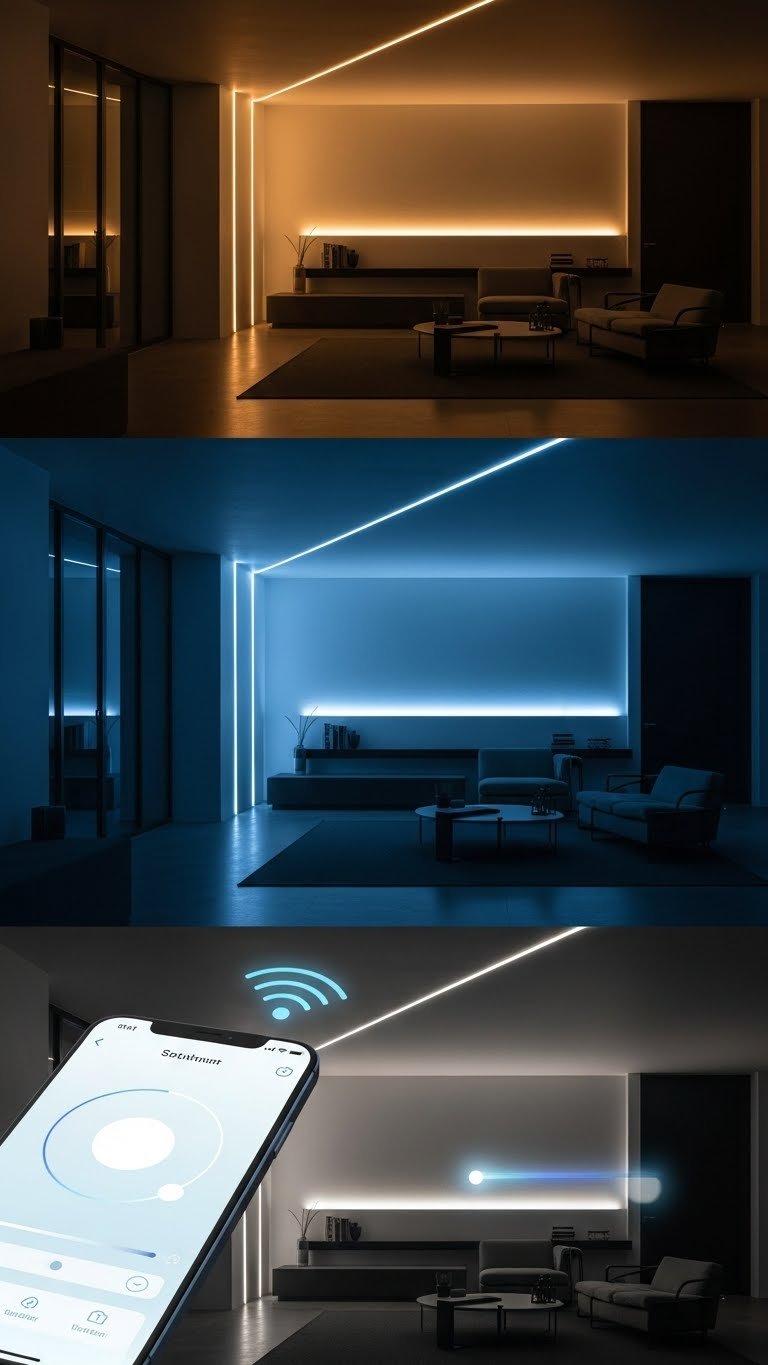
While technology continues to revolutionize interior design, smart lighting control systems have emerged as a game-changing solution for ambient architectural illumination.
You’ll discover unparalleled freedom through smart automation, enabling precise energy efficiency and personalized lighting scenes.
Wireless controls, smartphone integration, and AI-driven algorithms transform your space with intuitive, responsive architectural lighting.
Emotional Lighting: Color Temperature and Mood

When exploring the psychological dimensions of architectural lighting, color temperature emerges as a critical design parameter that profoundly influences human emotional perception.
You’ll discover how warm amber tones create ambient warmth and serenity, while cooler blues evoke therapeutic lighting experiences that transform psychological landscapes through nuanced visual comfort and mood enhancement.
Exterior Facade Lighting Techniques
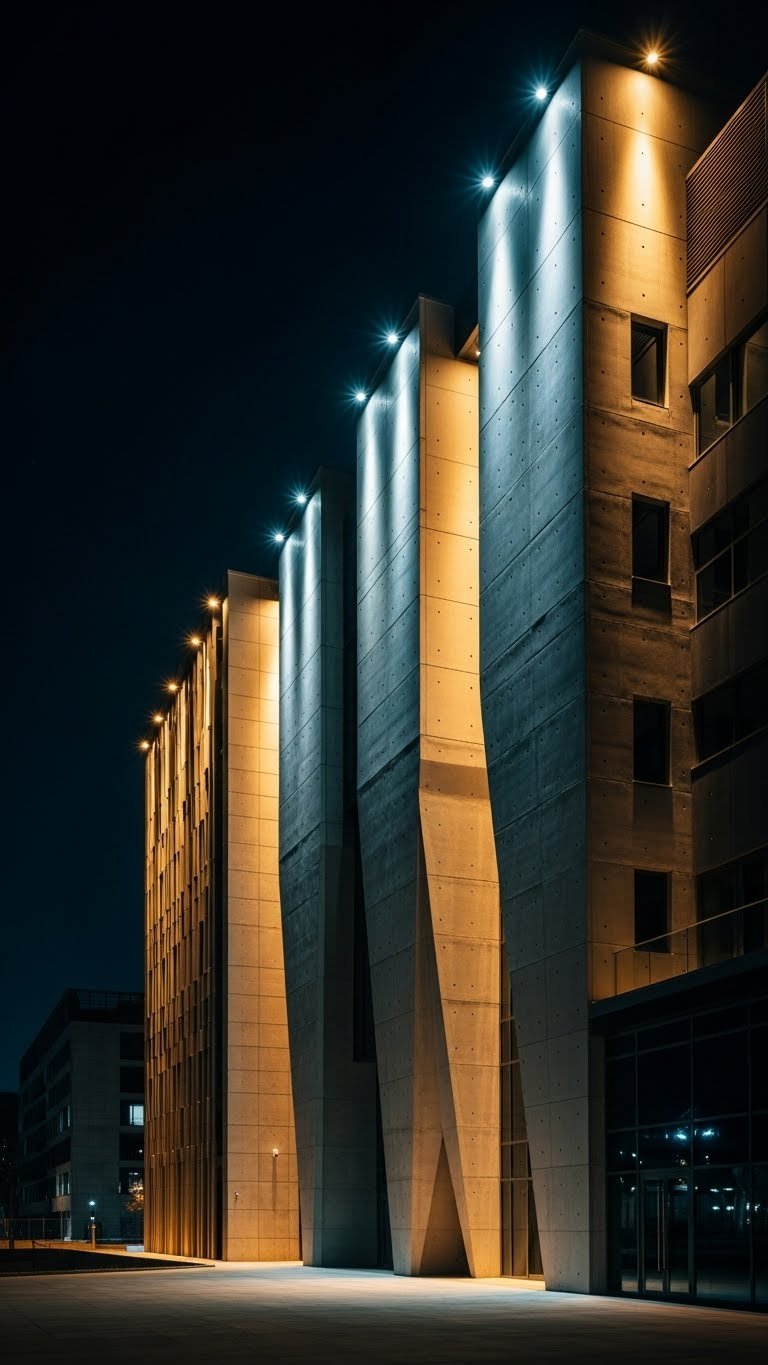
Because architectural lighting transforms exterior facades into dynamic visual narratives, designers can leverage sophisticated illumination techniques to dramatize building geometries and enhance urban landscapes.
You’ll capture facade textures through strategic uplighting techniques, creating depth, shadow play, and sculptural dimensionality that reveals architectural contours with dramatic precision and visual intensity.
Style-Specific Lighting Approaches

Should architectural lighting design embrace unique stylistic nuances, designers can strategically illuminate structures by matching illumination techniques to specific architectural aesthetics.
Style-specific fixtures with bold color palettes and minimalistic designs leverage eclectic influences and historical inspirations, integrating contemporary trends through geometric shapes and functional ambient contrasts that communicate cultural motifs dynamically.
Sustainable Lighting Design
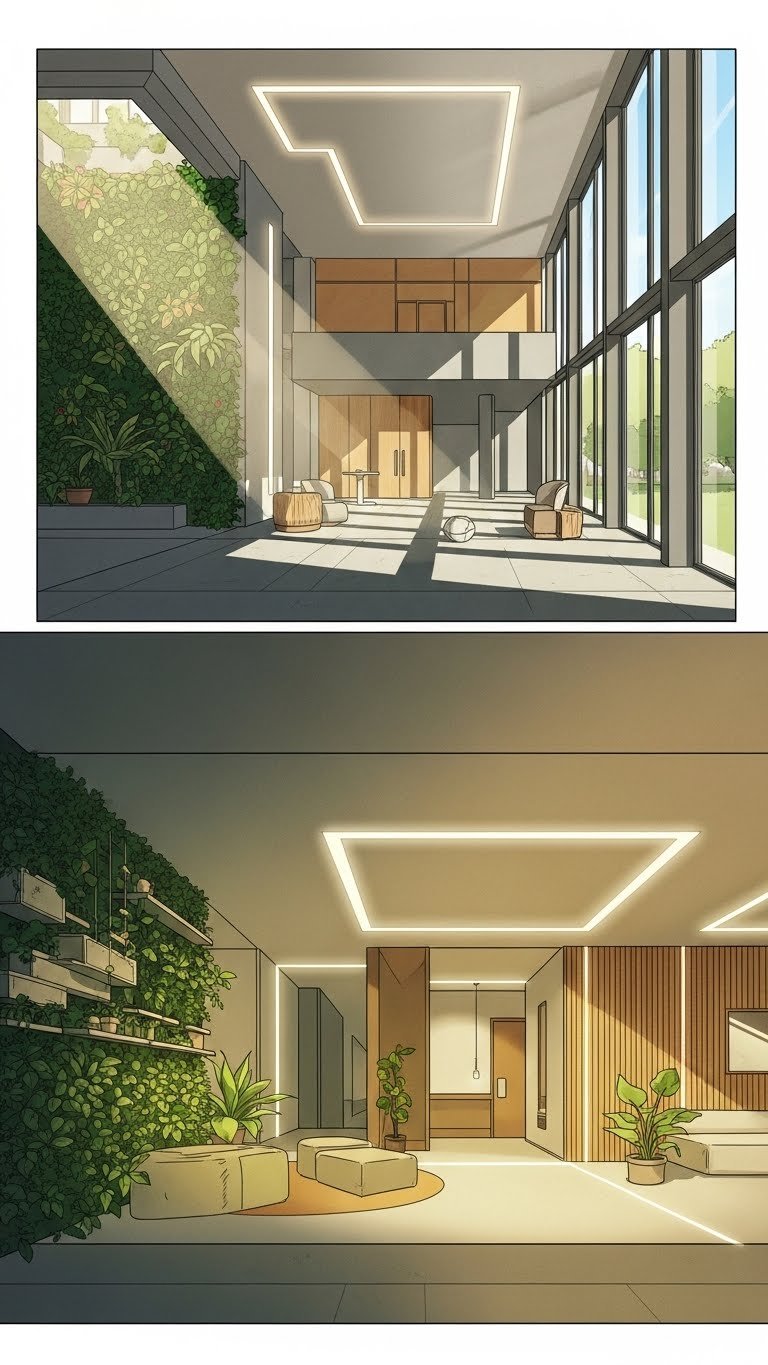
Emerging architectural lighting strategies increasingly prioritize sustainability through innovative energy-efficient technologies and eco-conscious design methodologies.
You’ll discover cutting-edge solutions like renewable energy integration, biophilic lighting concepts, and passive design strategies that dramatically reduce carbon footprint while creating stunning, custom lighting environments using sustainable sourcing practices and eco-friendly materials.
Advanced Lighting Manipulation Techniques
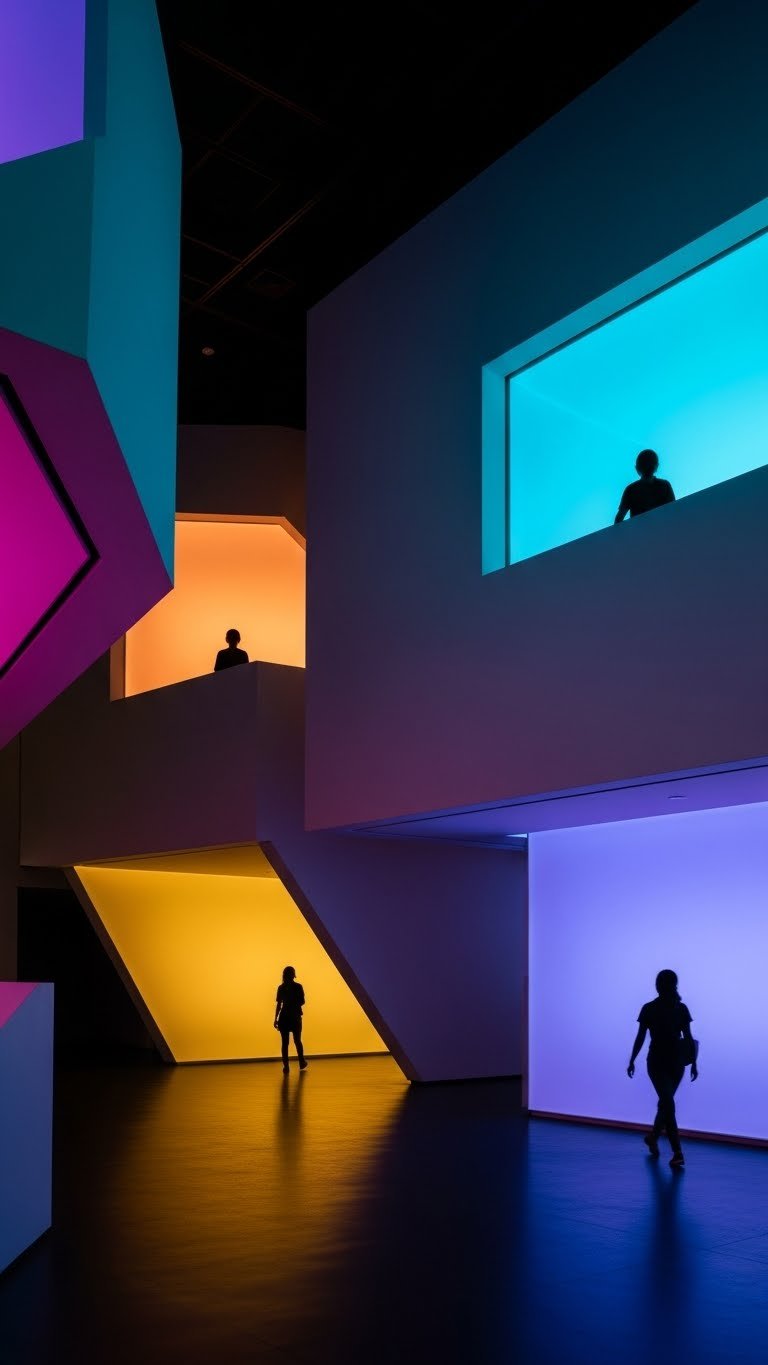
Beyond sustainable energy considerations, architectural lighting now explores sophisticated manipulation techniques that transform spatial experiences through precise light control and dynamic interactive systems.
You’ll discover color manipulation methods that redefine architectural boundaries, using dynamic layering to create immersive environments that respond intuitively to human presence and emotional landscapes.
Museum and Gallery Lighting Principles

While illuminating artwork requires meticulous precision, museum and gallery lighting transcends mere visibility—it’s a nuanced choreography of luminous intensity, spectral quality, and spatial interaction. You’ll want to master museum engagement by strategically controlling color temperature, minimizing UV radiation, and creating dramatic visual narratives that enhance gallery perception without compromising artwork preservation.
Residential Lighting Design
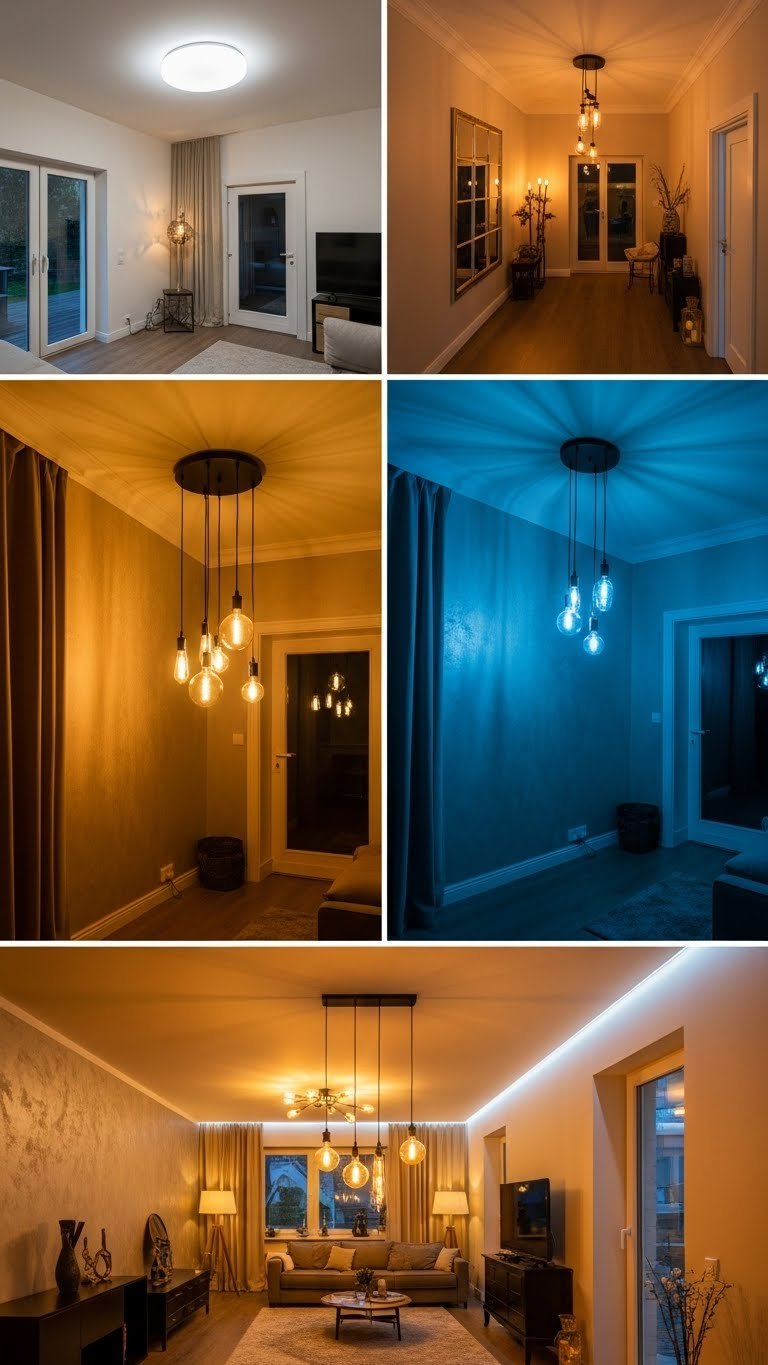
As architectural lighting shifts from institutional spaces to personal environments, residential design demands a sophisticated approach that balances functional illumination with emotional ambiance.
You’ll create aesthetic harmony through strategic lighting layers, integrating ambient ceiling fixtures, decorative bulbs, and creative installations that transform functional spaces with playful shadows and innovative energy-efficient trends.
Commercial Lighting Solutions
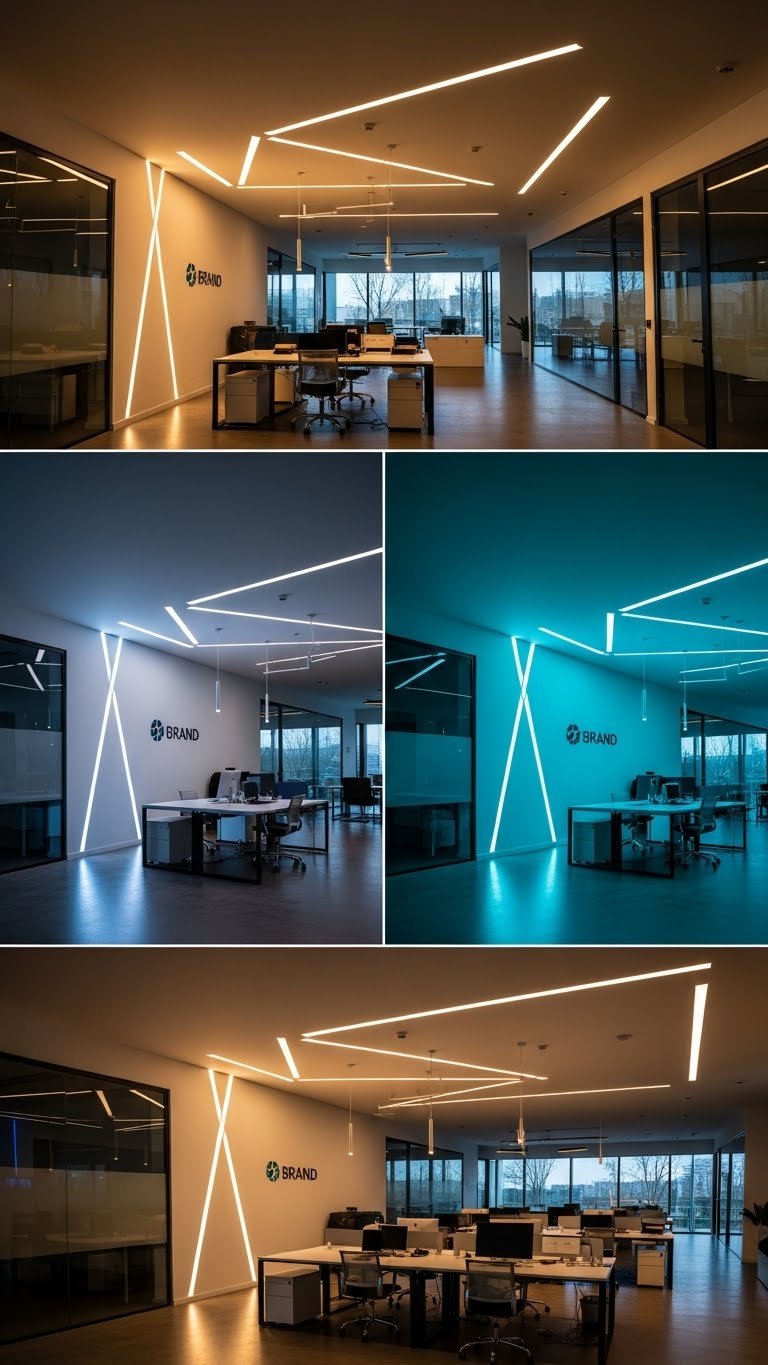
Architectural lighting strategies that illuminate residential spaces seamlessly extend into commercial environments, where illumination becomes a powerful tool for brand expression and functional design.
You’ll discover energy efficient solutions that transform commercial space aesthetics, creating dynamic visual landscapes that inspire productivity and reflect innovative corporate identities through strategic, adaptive lighting techniques.
Hospitality Lighting Design
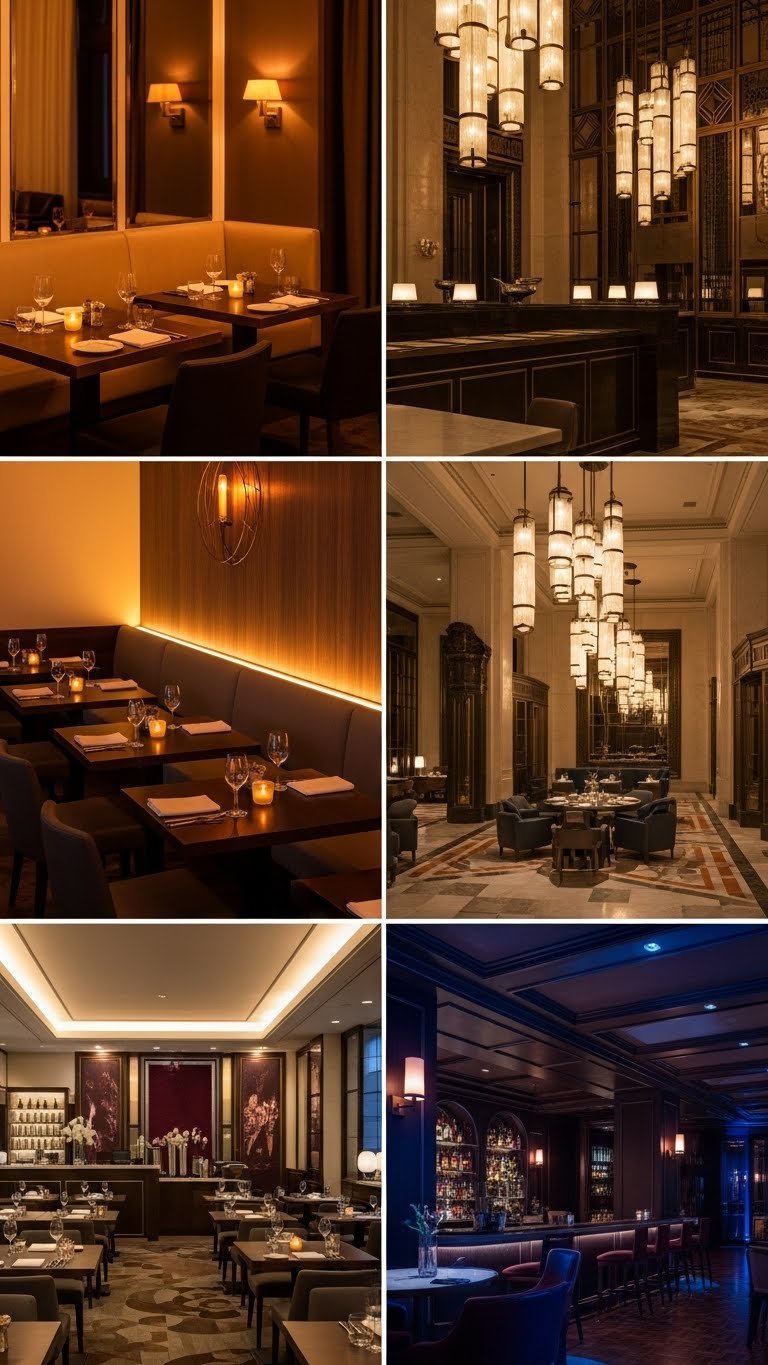
Because lighting serves as the silent orchestrator of guest experiences, hospitality environments demand nuanced illumination strategies that transform spatial perceptions and emotional resonance.
Your restaurant ambiance, hotel lobbies, and bar lighting must choreograph intimate moments, crafting immersive environments that subtly guide guest interactions through strategic kitchen illumination, conference room dynamics, and outdoor terrace design.
Industrial and Minimalist Lighting
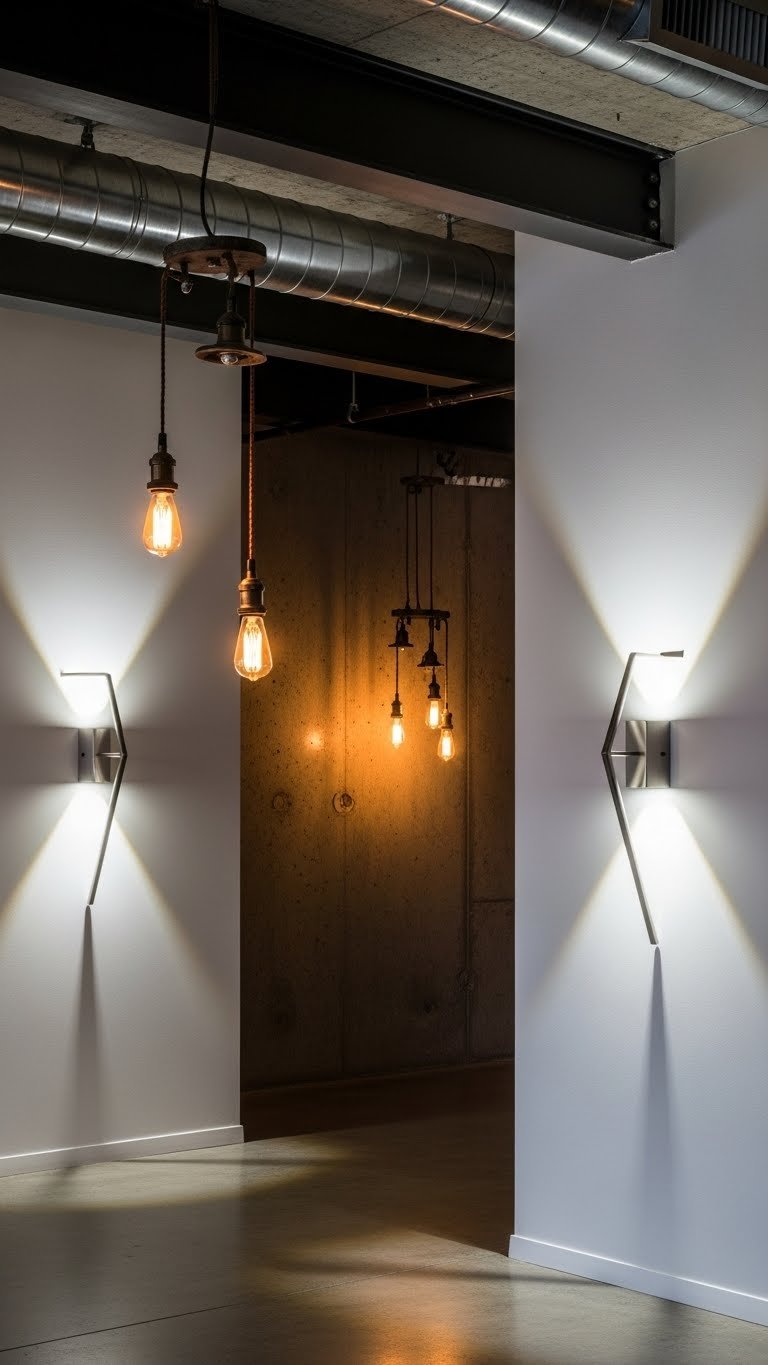
When industrial design intersects with minimalist lighting principles, you’ll discover a powerful aesthetic that strips illumination down to its most essential elements. Industrial pendant lights with exposed bulbs and raw metal finishes create sharp visual statements. Minimalist sconces with clean lines and geometric forms transform spaces, offering stark functionality while maintaining elegant architectural integrity.
Technological Integration in Lighting

Smart lighting technologies are revolutionizing how we interact with illumination, extending far beyond industrial design’s raw aesthetic.
IoT lighting solutions and wireless lighting control now enable you to transform spaces through AI-driven, adaptive technologies. Connected lighting ecosystems integrate LED advancements with interactive displays, creating immersive environments that respond dynamically to your preferences and mood.
Cultural and Regional Lighting Variations
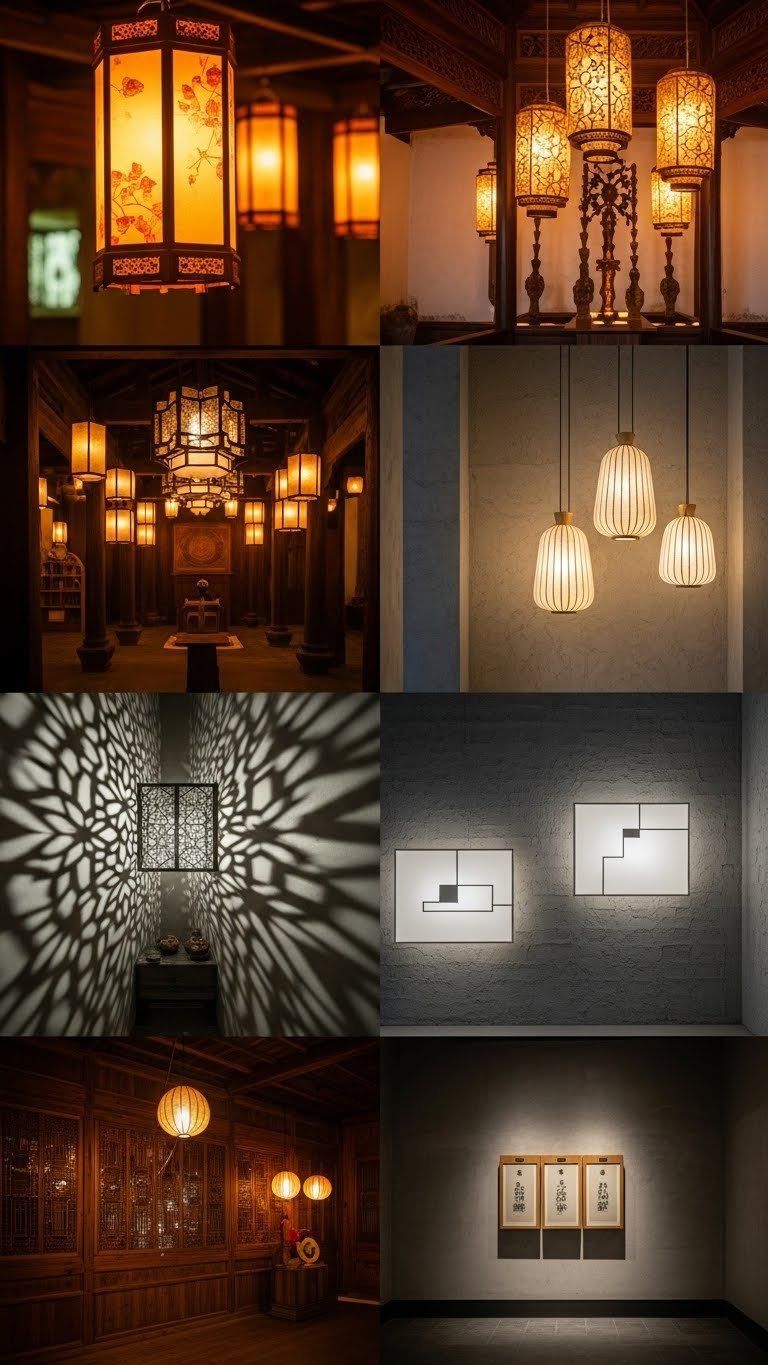
Although architectural lighting transcends mere illumination, regional design philosophies profoundly shape how cultures conceptualize and implement light within spatial environments.
You’ll discover unique cultural symbolism through traditional techniques that reflect community identity, where local craftsmanship and historical influences merge with modern interpretations of architectural styles and lighting rituals.
Lighting for Special Environments
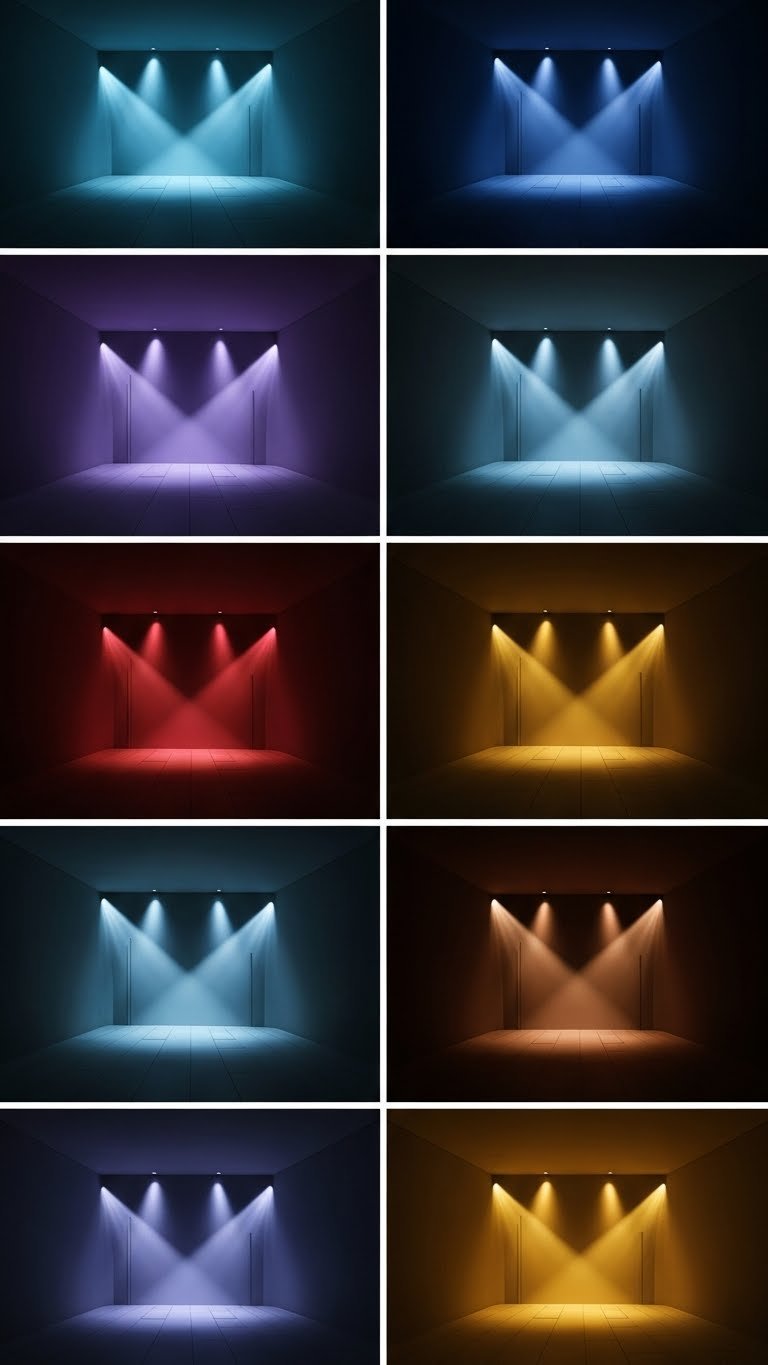
In seven critical environments, lighting design transcends conventional illumination strategies, demanding specialized approaches that dynamically respond to unique spatial requirements.
You’ll discover how ambient light transforms sensory experiences through focused lighting techniques, creating contextual architectural storytelling that explores psychological interactions within distinctive spatial ambiances through creative, adaptive design strategies.
Performance and Installation Lighting
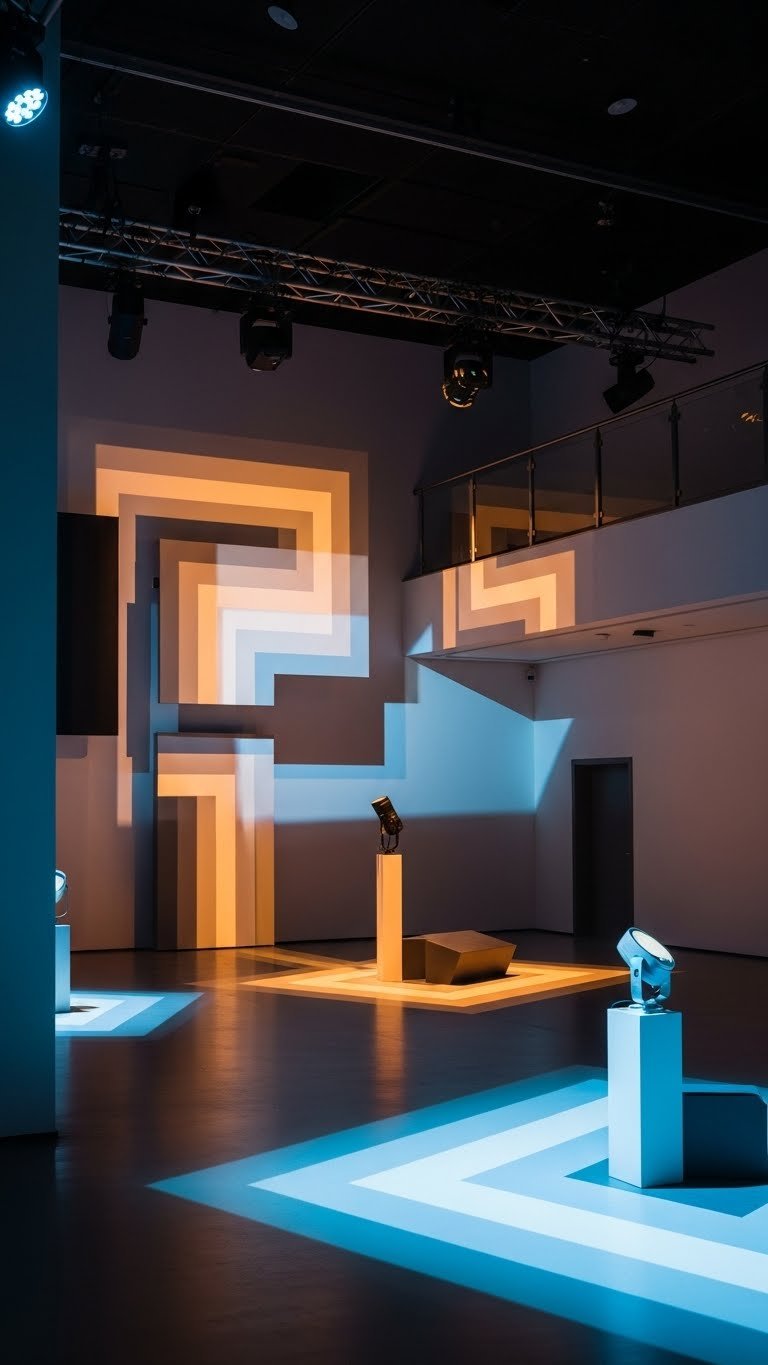
Precisely calibrated lighting transforms performance and installation spaces into dynamic canvases where architectural illumination becomes a narrative medium.
You’ll leverage advanced installation techniques and performance metrics to optimize lighting technologies, ensuring energy efficiency through strategic fixture selection and adherence to compliance standards while maintaining aesthetic considerations and embracing innovative installation guidelines.
Restoration and Conservation Lighting
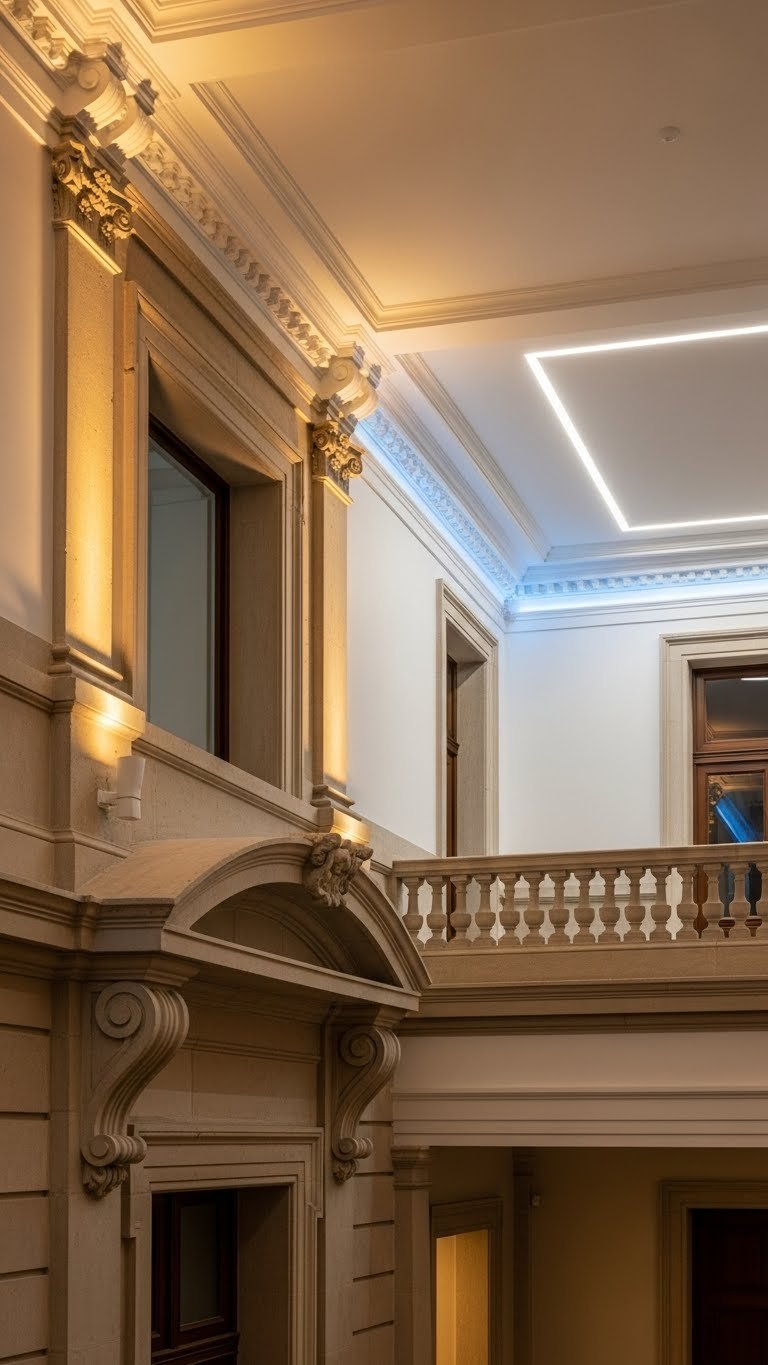
When curating architectural restoration projects, lighting becomes a critical conservation tool that bridges historical preservation with contemporary technological precision.
You’ll discover illumination techniques that sensitively integrate period aesthetics while enhancing architectural character through adaptive reuse strategies that respect material conservation and context awareness.
Vertical Space Enhancement

Architectural lighting strategies extend beyond horizontal illumination, propelling designers toward innovative vertical space manipulation.
You’ll discover transformative techniques like wall projections and ceiling sculptures that elevate spatial experiences.
Vertical gardens integrated with strategic luminescence create biophilic dimensions, while lofted spaces leverage skyward perspectives to redefine urban verticality and heighten architectural dimensionality.
Wayfinding Through Illumination
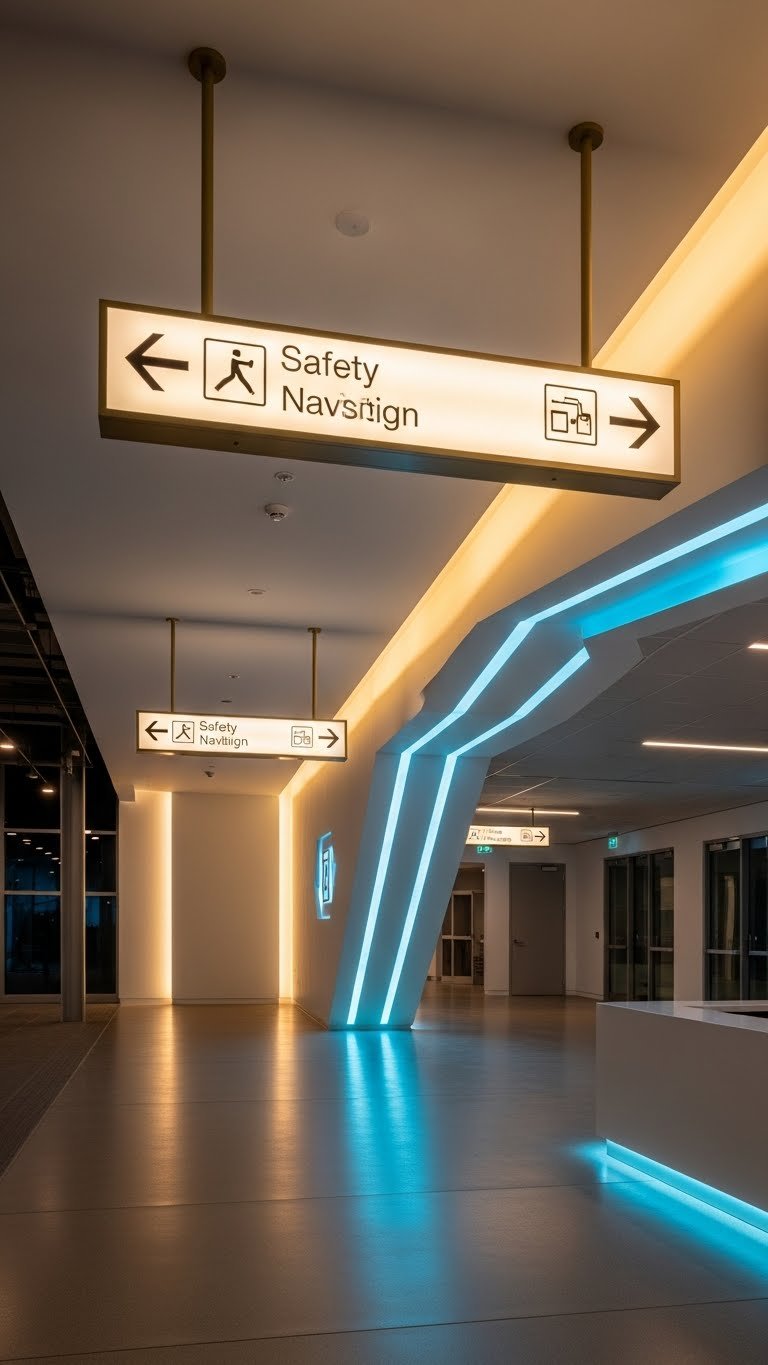
Because navigation relies on visual cues, lighting emerges as a critical design language for spatial orientation and intuitive movement.
Strategic light positioning transforms wayfinding strategies, using illuminated signage and directional indicators to guide you seamlessly.
Aesthetic guidance through carefully crafted safety lighting enhances spatial awareness, creating an intuitive pathway experience that liberates your architectural journey.
Experimental Lighting Approaches
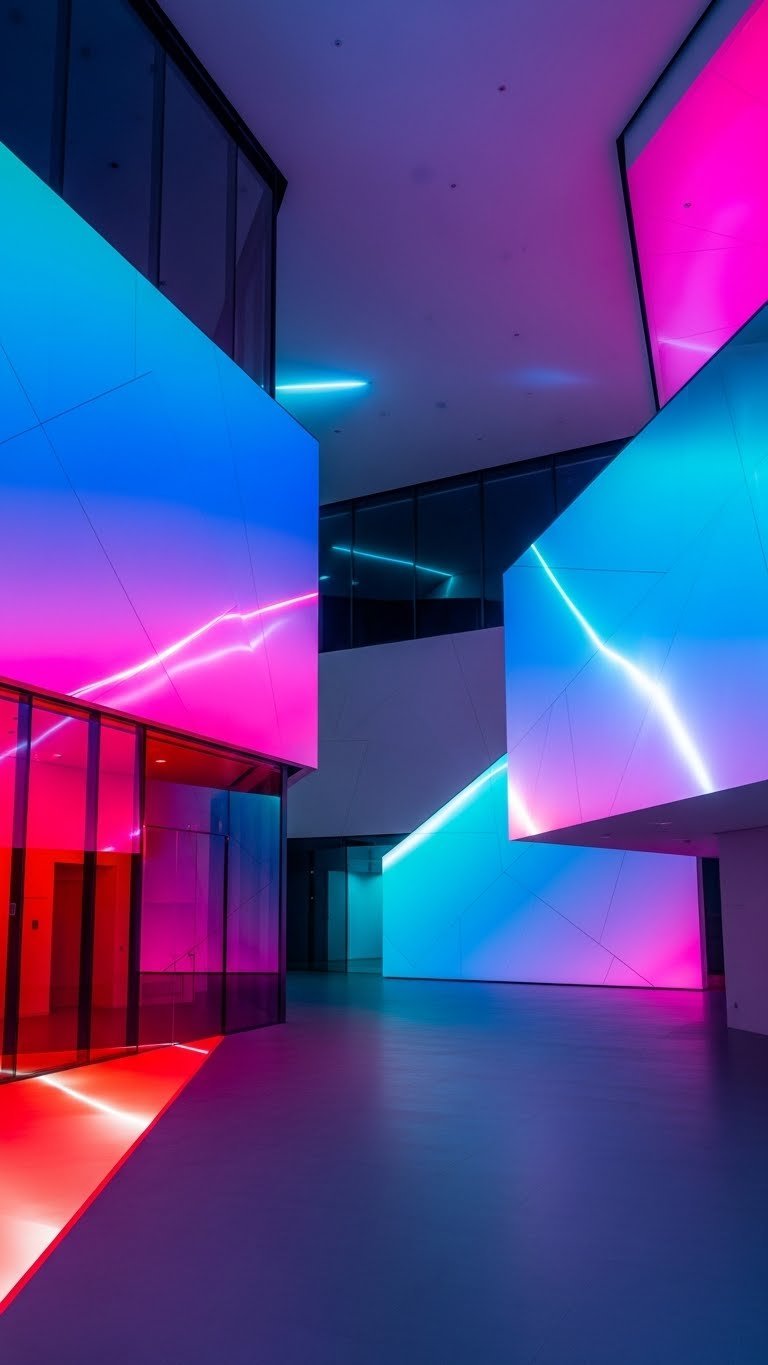
Beyond traditional wayfinding methodologies, experimental lighting approaches challenge conventional spatial illumination paradigms by reimagining light as a dynamic, interactive medium.
You’ll explore neon color washes and dynamic movement effects that transform architectural spaces into immersive, responsive environments.
These cutting-edge techniques redefine boundaries between form, perception, and luminous expression.
Future of Architectural Lighting
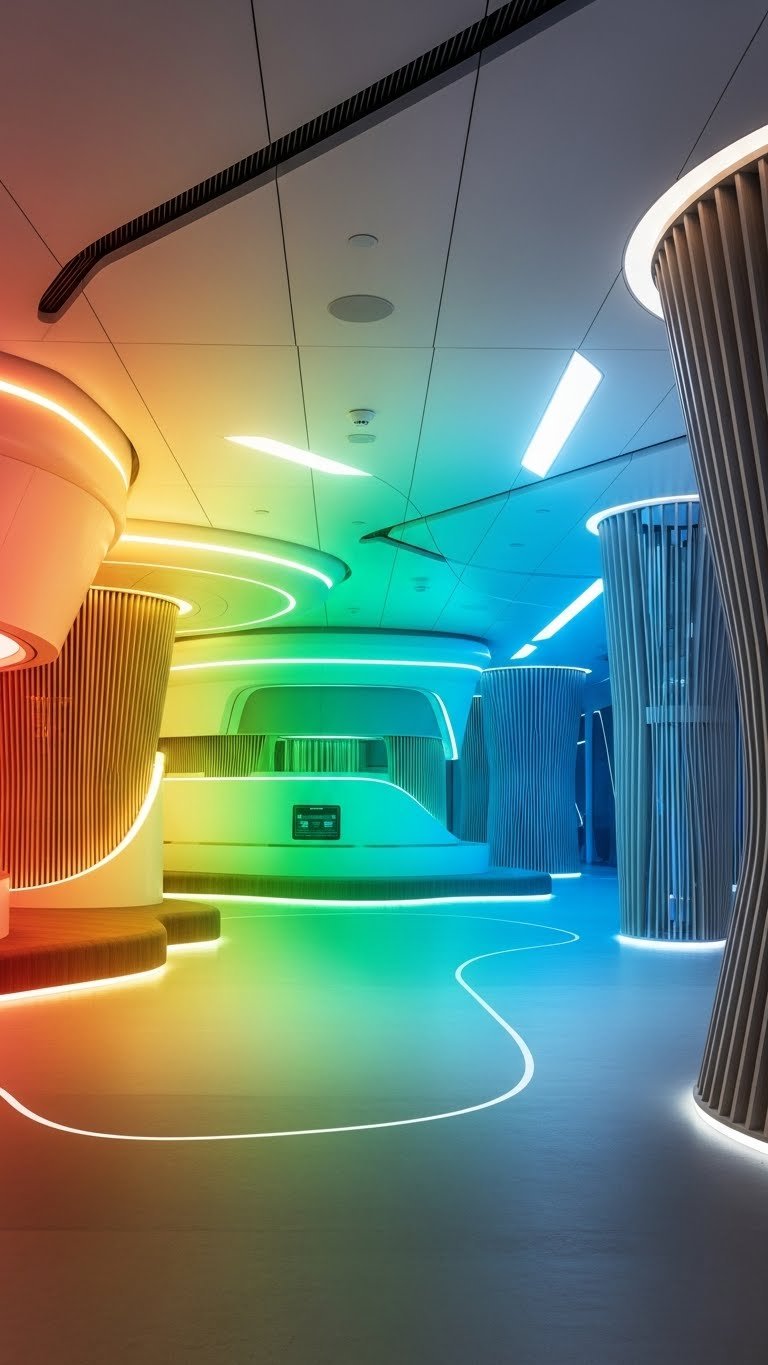
As technology and design continue to converge, the future of architectural lighting promises transformative innovations that will radically reshape human spatial experiences.
You’ll witness AI-driven interactive designs, biomimetic lighting systems creating immersive environments, and adaptive technologies that respond intuitively to emotional intelligence while maintaining unprecedented energy efficiency.
Leave a Reply