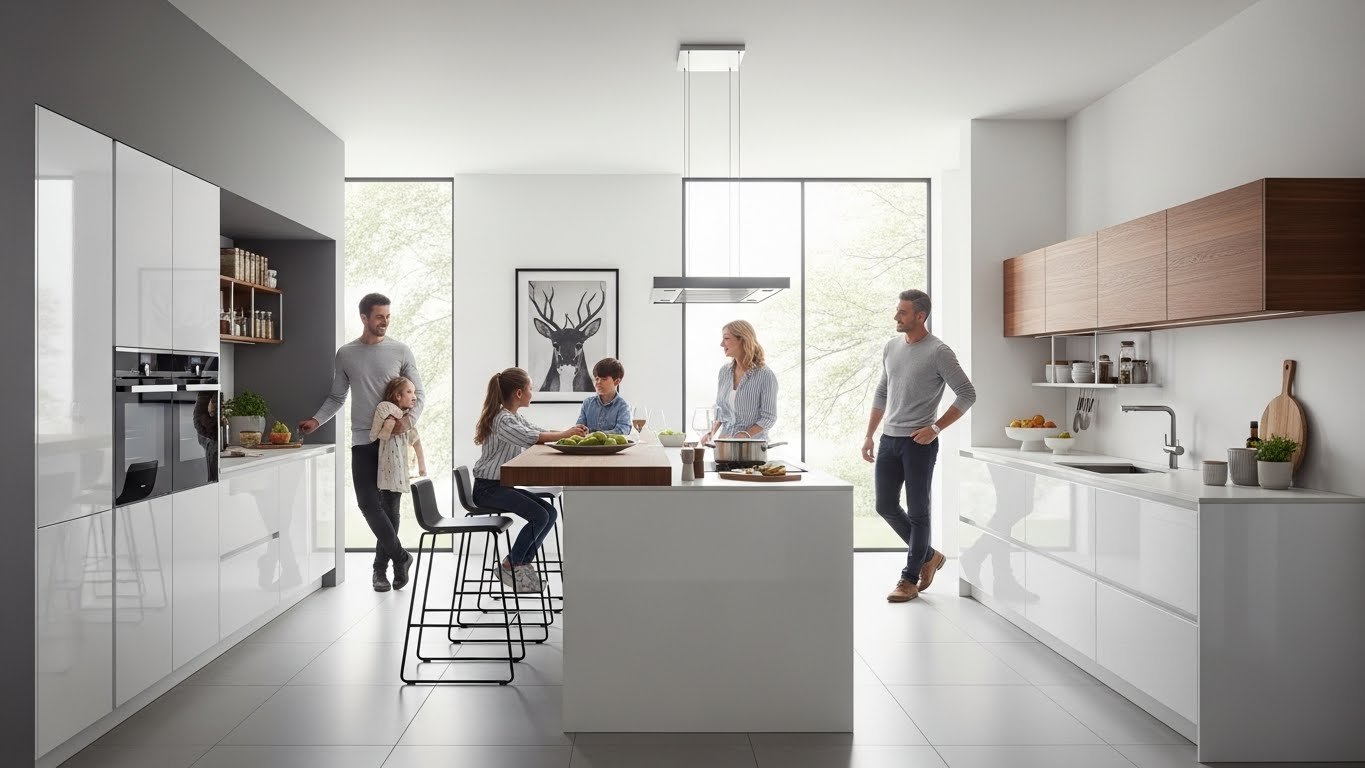
Are you tired of cramped, outdated kitchen spaces that limit your culinary creativity? Modern open kitchen designs aren’t just about aesthetics—they’re transformative environments that seamlessly blend functionality with style. Your kitchen can become more than a cooking area; it’s a dynamic social hub where design meets practicality. From sleek minimalist layouts to intelligent storage solutions, these 21 innovative design concepts will challenge everything you thought you knew about kitchen spaces. Want to revolutionize your home’s most important room?
21 Sleek Open Kitchen Design Ideas to Transform Your Space
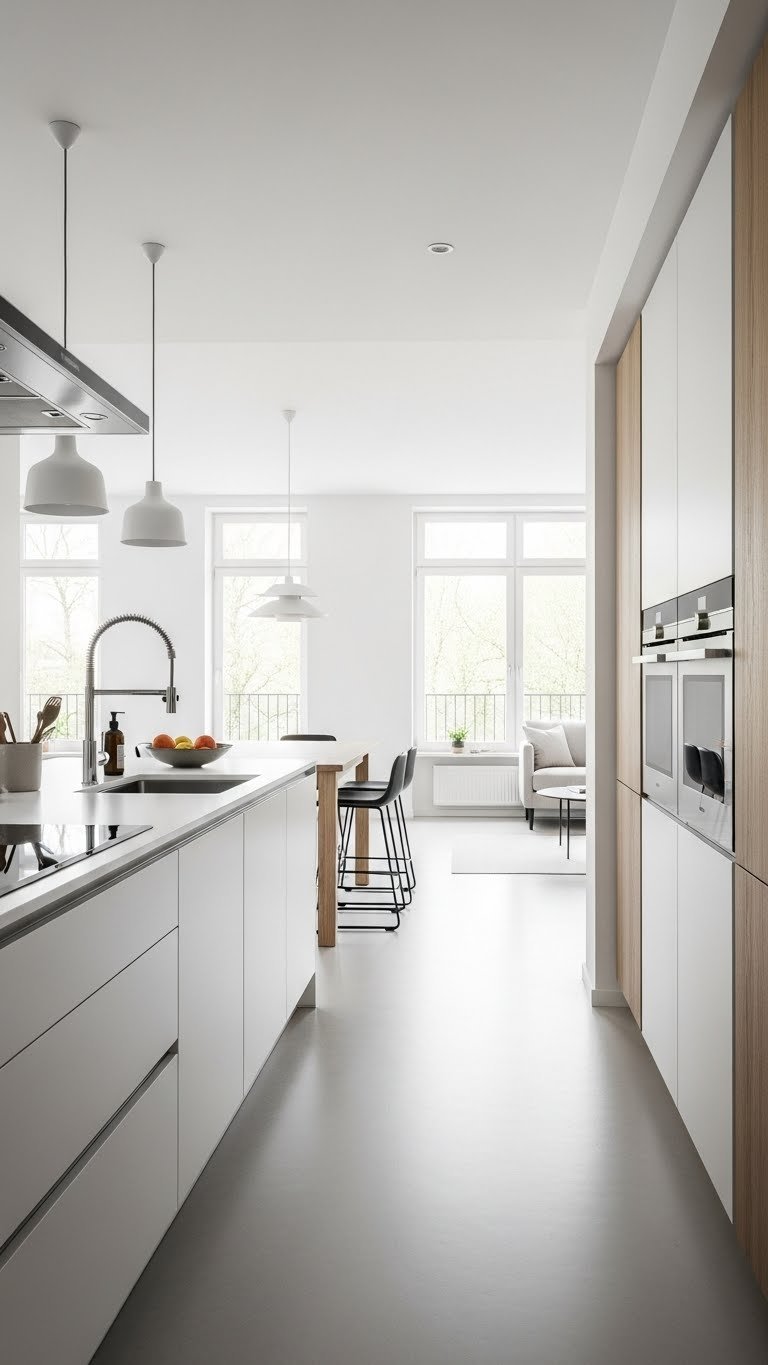
The modern kitchen is a canvas awaiting transformation.
Embrace modern minimalism with sleek design elements that maximize space efficiency.
Opt for clean lines, integrated appliances, and neutral color palettes that create an open, breathable environment.
Your kitchen becomes more than a cooking space—it’s a dynamic, versatile area that reflects contemporary living.
Understanding Modern Kitchen Design Trends
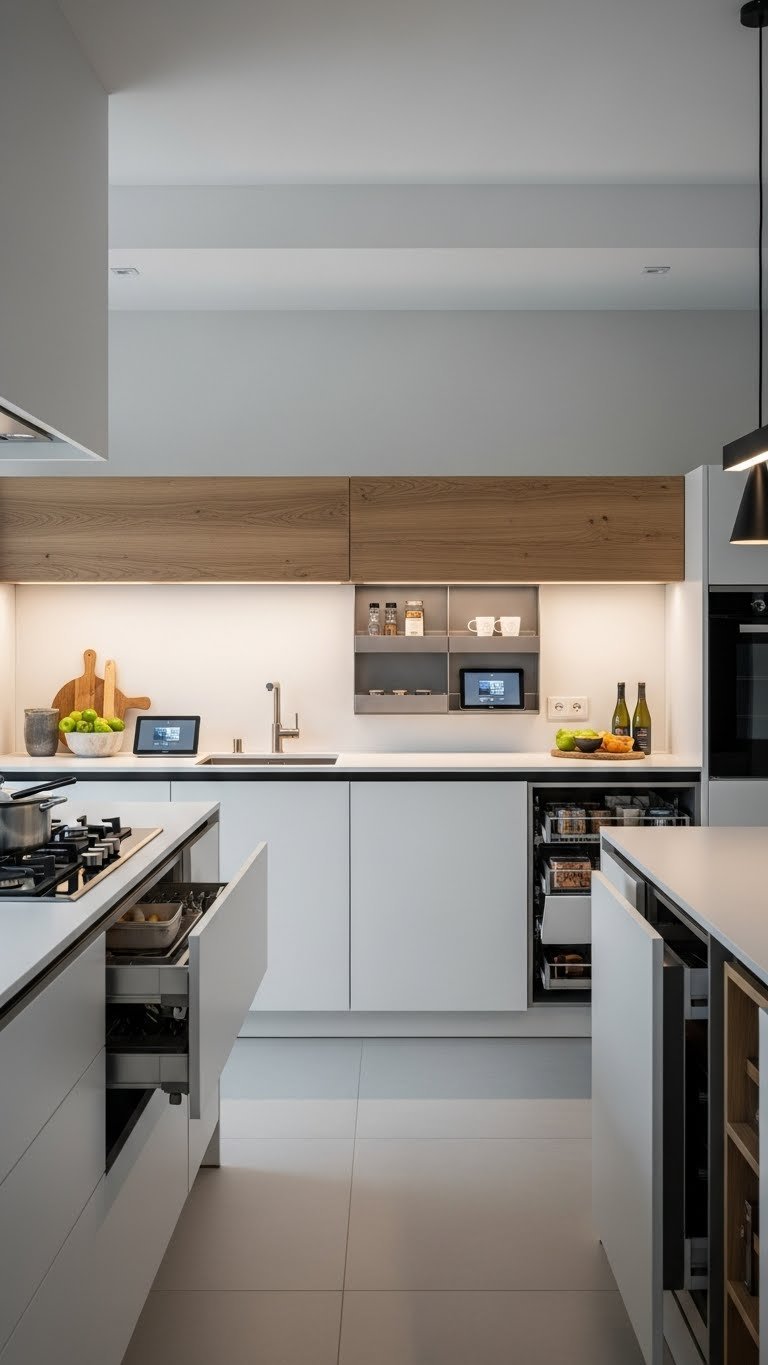
While contemporary kitchen design continues to evolve, current trends emphasize functionality, minimalism, and seamless integration of technology and aesthetic appeal.
You’ll discover that minimalist aesthetics now prioritize clean lines, hidden appliances, and multifunctional spaces.
These design approaches offer functional flexibility, enabling you to create a kitchen that’s both visually striking and supremely practical.
Assess Your Kitchen’s Current Limitations
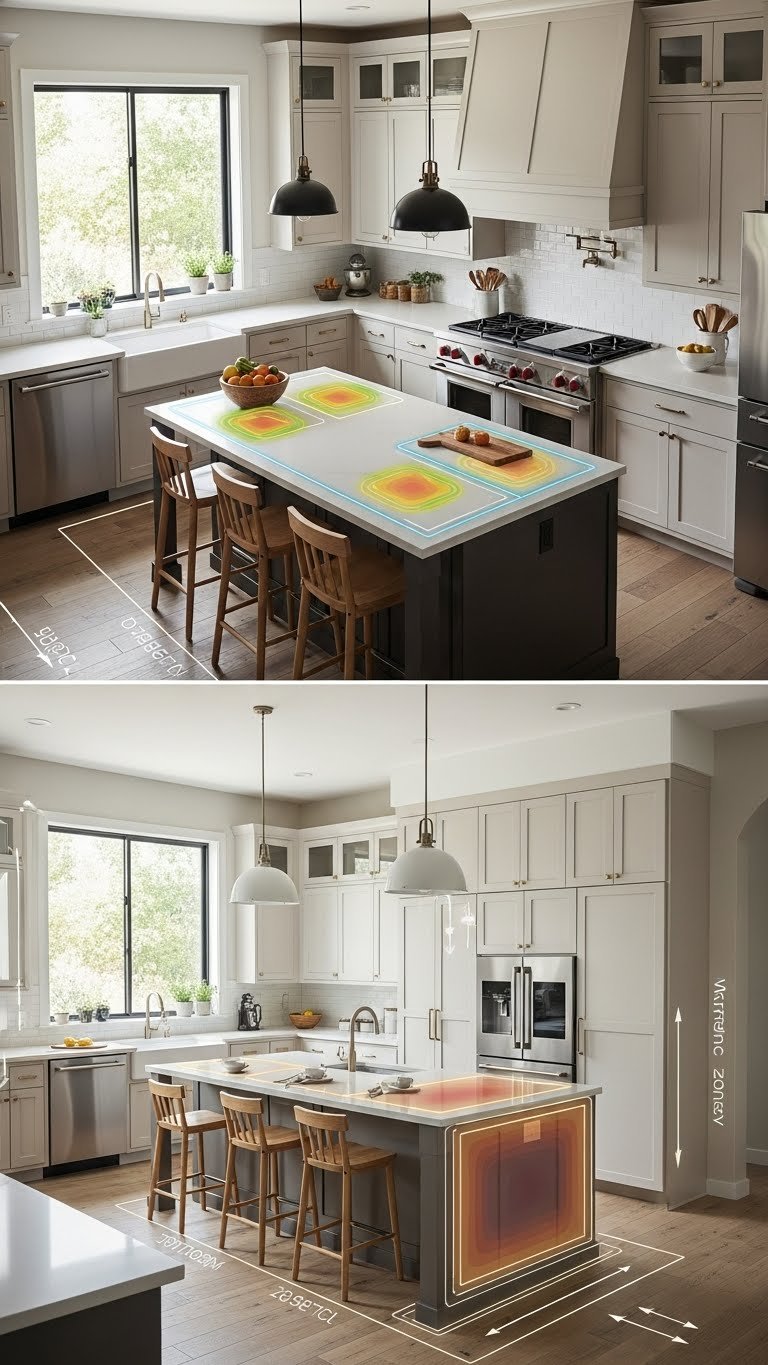
Transforming your kitchen begins with an honest evaluation of its existing constraints and potential.
Analyze your kitchen’s traffic flow, identifying bottlenecks and inefficient spaces.
Consider user preferences and how current layout limitations impact cooking, entertaining, and daily functionality.
Understanding these challenges will guide your open kitchen design strategy.
Evaluate Open vs. Closed Layout Options

Whether you’re renovating or reimagining your culinary space, choosing between open and closed kitchen layouts demands careful consideration of your lifestyle, home architecture, and functional needs.
Open layout benefits include enhanced social interaction and improved light flow, while closed layout drawbacks can limit spatial connectivity and visual appeal.
Your design choice should reflect your personal aesthetic and practical requirements.
Design Your Optimal Kitchen Work Triangle

After determining your preferred kitchen layout, optimizing your workspace becomes the next strategic design priority.
Craft a kitchen work triangle that maximizes kitchen ergonomics and workflow optimization. Position your sink, stove, and refrigerator in a triangular formation, keeping each point 4-9 feet apart to create an efficient, fluid cooking environment.
Create Efficient Zones Without Blocking Flow
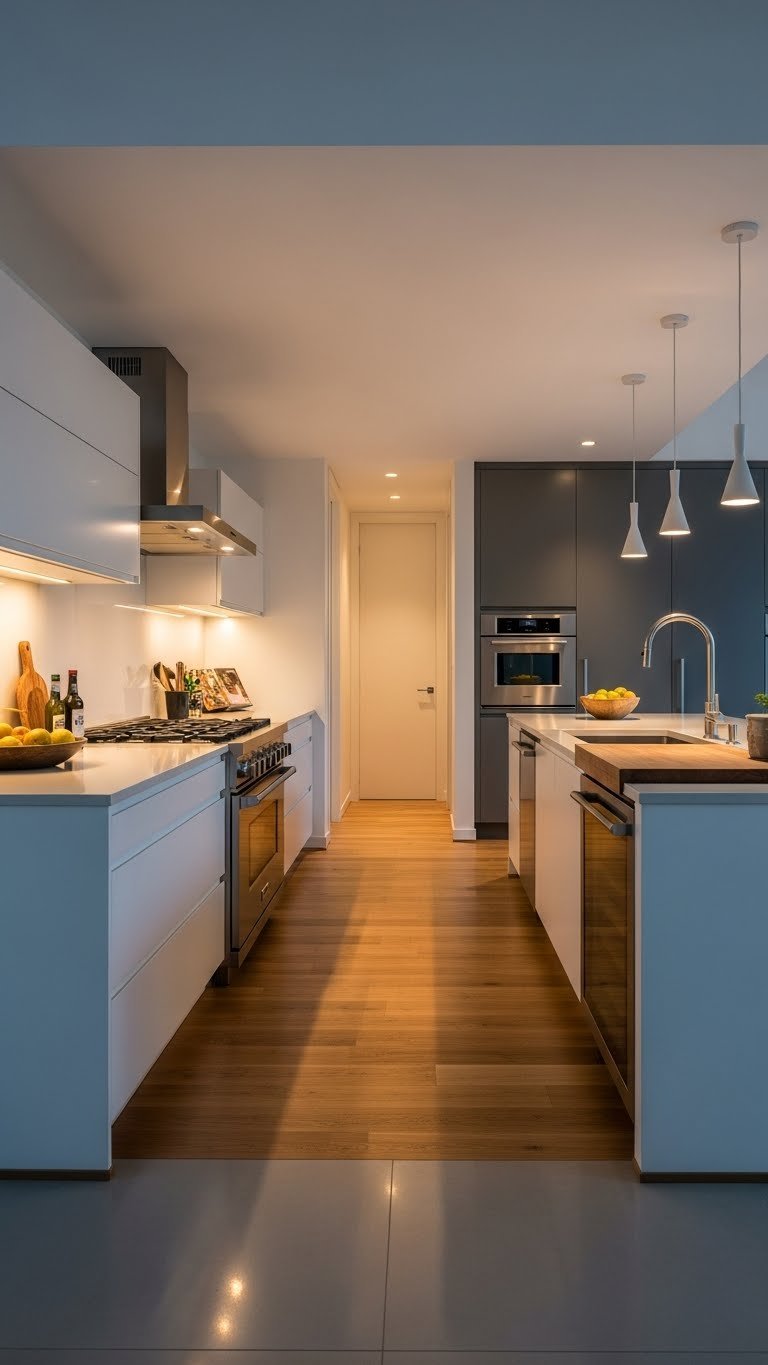
While optimizing your kitchen’s spatial arrangement, you’ll want to strategically design functional zones that enhance workflow without compromising the overall sense of openness. Implement zoning strategies that subtly define areas through lighting, flooring shifts, or subtle architectural elements, ensuring flow optimization remains seamless and intuitive throughout your culinary space.
Select the Perfect Kitchen Island Configuration
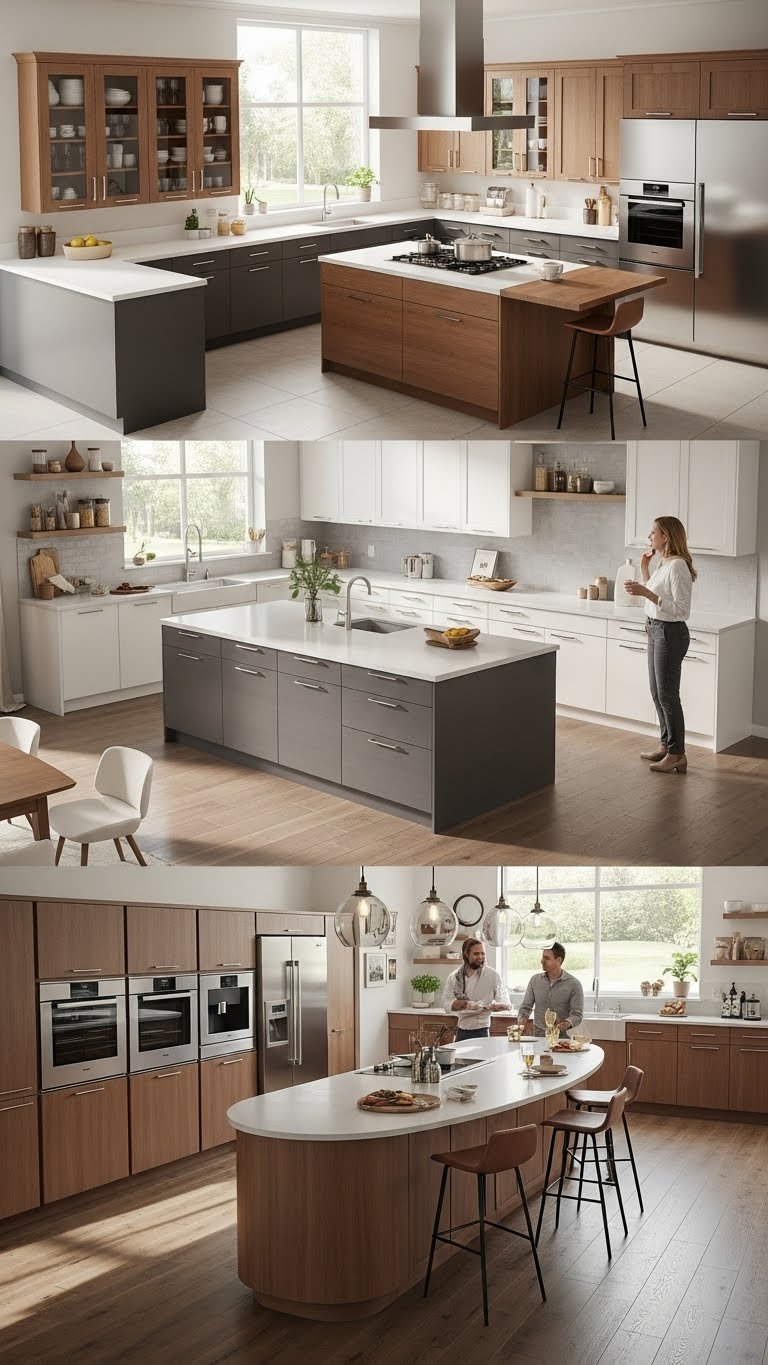
How do you transform a kitchen island from a mere countertop into the dynamic centerpiece of your culinary space?
Consider island shapes that enhance workspace flow: L-shaped for corner utility, rectangular for sleek symmetry, or curved designs that invite social interaction.
Choose configurations that maximize movement, integrate appliances seamlessly, and reflect your lifestyle’s unique rhythm.
Optimize Countertop Geometry for Smooth Movement

Since kitchen workflow determines culinary efficiency, strategic countertop geometry transforms your island from a passive surface to an active workspace navigator.
You’ll want to design a countertop layout that minimizes unnecessary steps, creating fluid movement patterns that enhance your cooking experience and maximize movement efficiency in your open kitchen design.
Maximize Hidden Storage With Smart Solutions

Where traditional kitchens sacrifice precious space, innovative open kitchen designs are redefining storage potential through ingenious hidden compartments.
You’ll maximize functionality with multi-use furniture that seamlessly integrates into your layout.
Pull-out pantry shelves, under-island drawers, and wall-mounted solutions transform dead spaces into smart storage zones, giving you ultimate kitchen freedom.
Illuminate Your Kitchen With Strategic Lighting

Why settle for a flat, lifeless kitchen when strategic lighting can transform your space into a vibrant culinary sanctuary?
Layer task lighting under cabinets and pendant lights above islands to create depth. Ambient illumination softens harsh angles, making your kitchen feel inviting and dynamic.
Strategically placed lights won’t just illuminate—they’ll elevate your entire cooking environment.
Choose Panel-Ready Appliances for Seamless Design
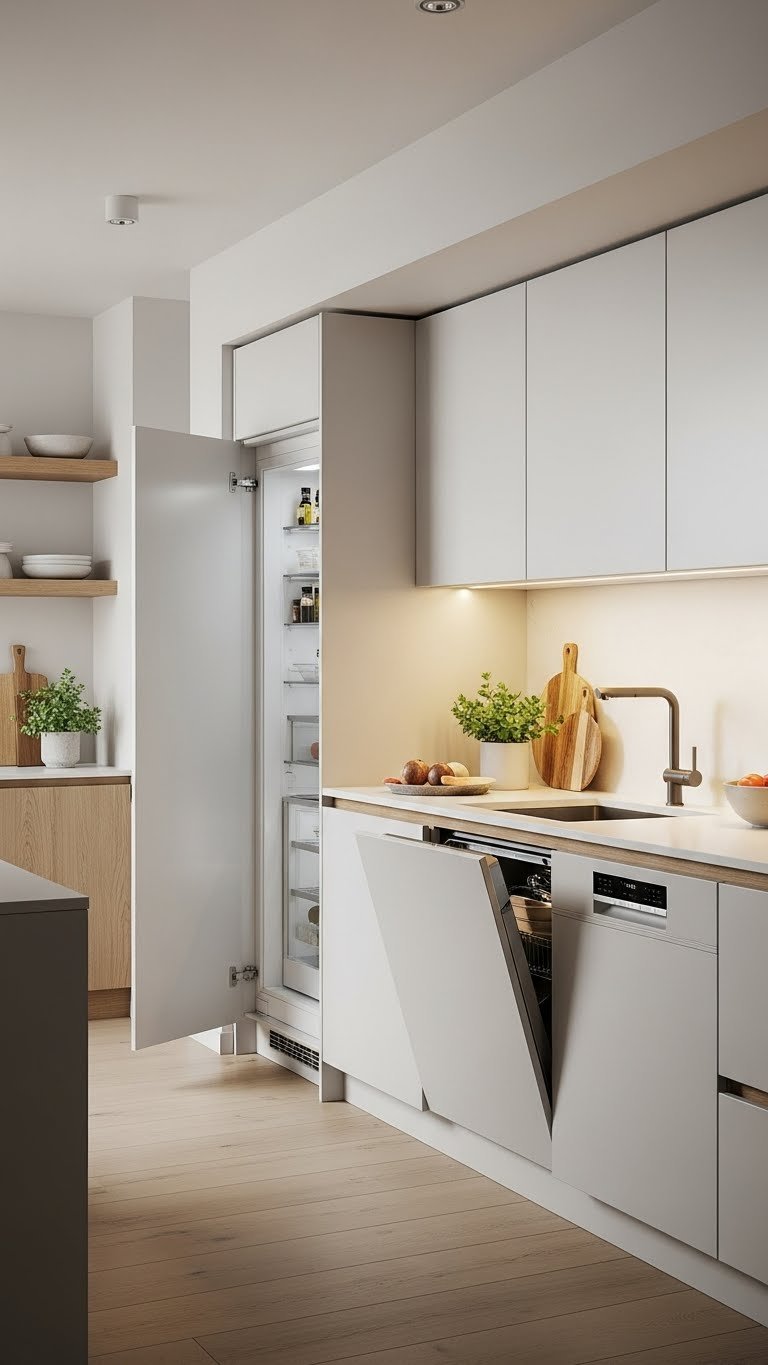
When designing an open kitchen, panel-ready appliances offer the ultimate in sleek, sophisticated integration.
You’ll love how these custom panel designs seamlessly blend your refrigerator, dishwasher, and other appliances into cabinetry.
Integrate Smart Technology Strategically
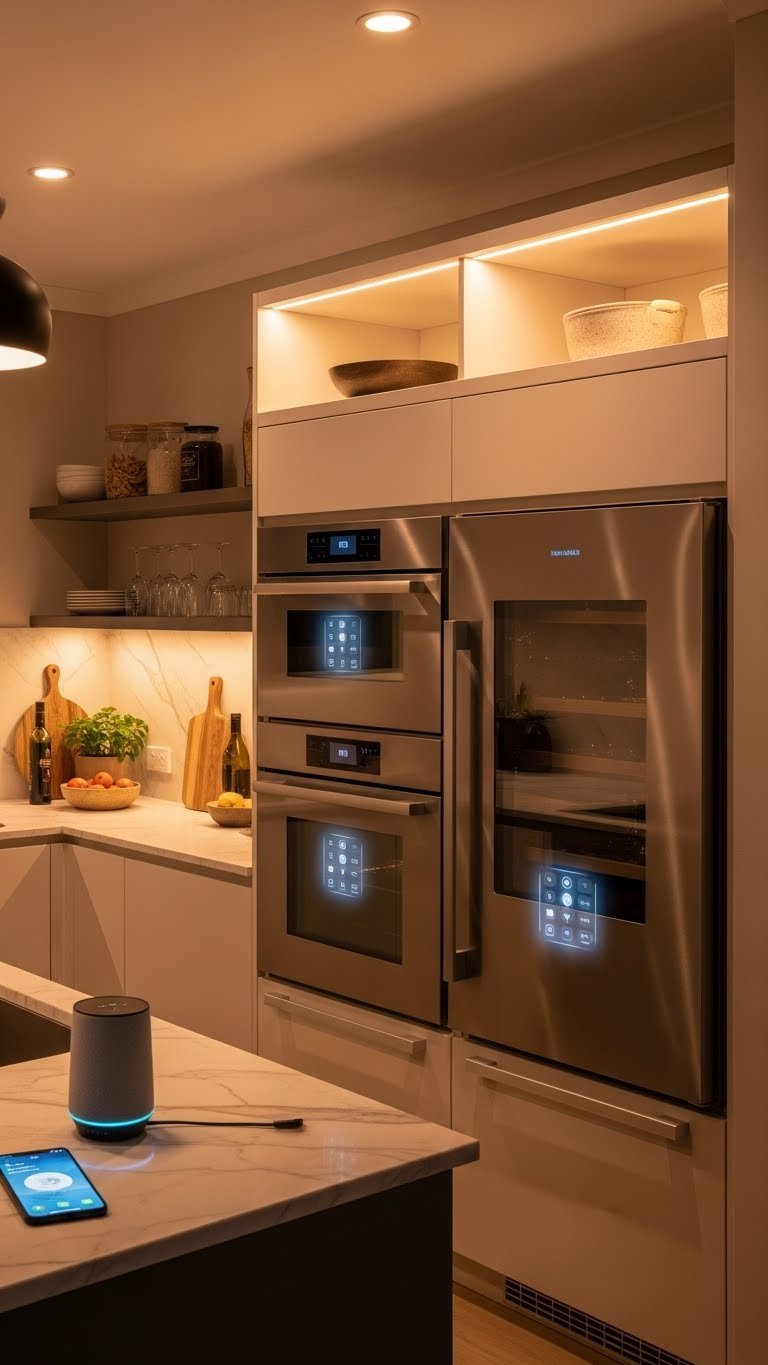
How can smart technology transform your open kitchen into a cutting-edge culinary hub?
Smart appliances with app integration and voice control are revolutionizing kitchen automation.
You’ll enjoy intuitive design that enhances cooking assistance, boosts energy efficiency, and provides advanced security features.
These intelligent systems seamlessly blend technology with your kitchen’s aesthetic, creating a truly modern culinary space.
Balance Minimalism With Personal Style
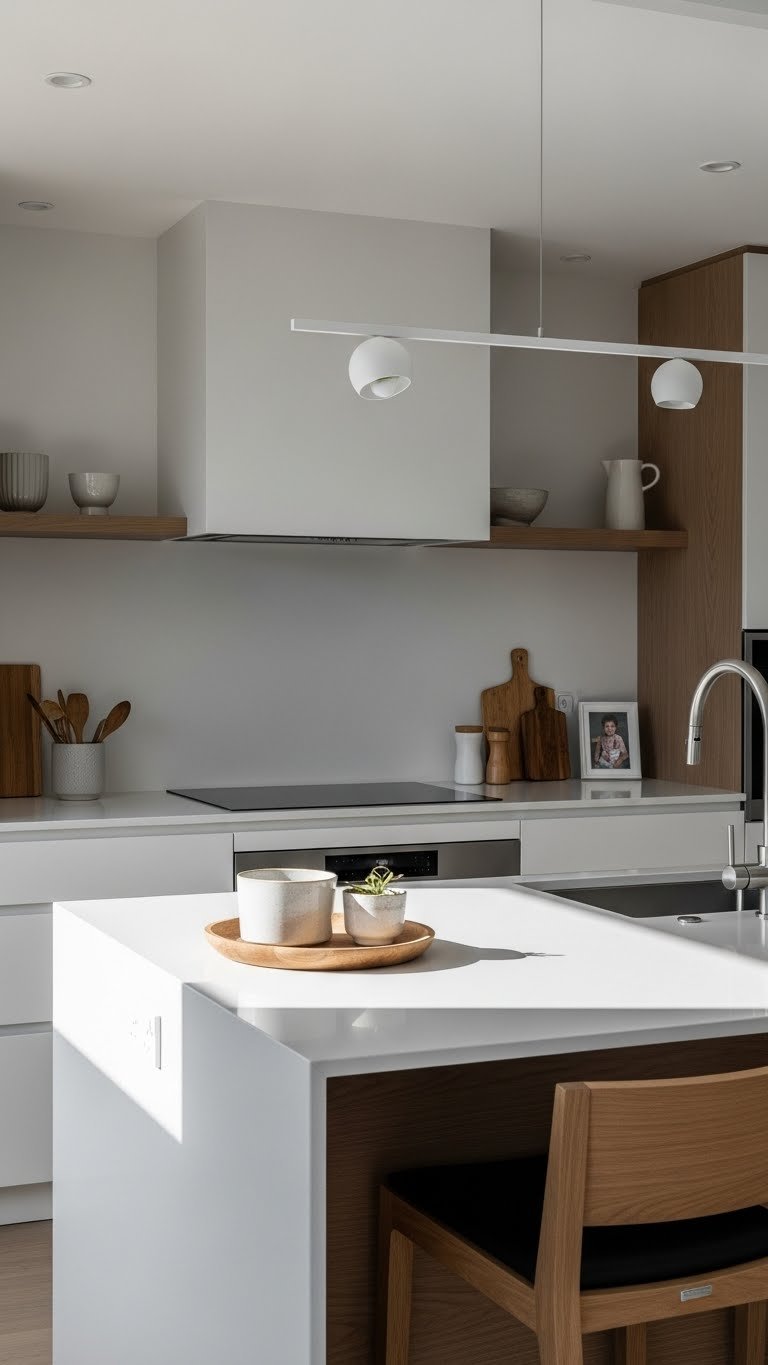
Beyond smart technology’s precision, an open kitchen design celebrates personal expression through thoughtful minimalism.
You’ll want to curate minimalist accents that reflect your unique style, selecting personalized decor that tells your story without overwhelming the space.
Strategic placement of meaningful pieces creates visual interest while maintaining a clean, uncluttered aesthetic.
Select Organic Materials and Natural Palettes

As modern design increasingly embraces nature’s inherent beauty, open kitchen spaces are transforming through organic materials and earthy color palettes that connect indoor environments with natural landscapes.
You’ll want to incorporate sustainable materials like reclaimed wood, stone countertops, and bamboo accents to create a harmonious, grounded aesthetic that reflects your connection to the natural world.
Design a Functional Beverage Station

When designing an open kitchen, creating a dedicated beverage station can transform your culinary space into a stylish and efficient hub for morning coffee, afternoon tea, or evening cocktails.
Consider sleek shelving for beverage storage and integrate stylish accessories like copper mugs, glass carafes, and elegant glassware to elevate your station’s aesthetic and functionality.
Create Pet-Friendly Kitchen Spaces
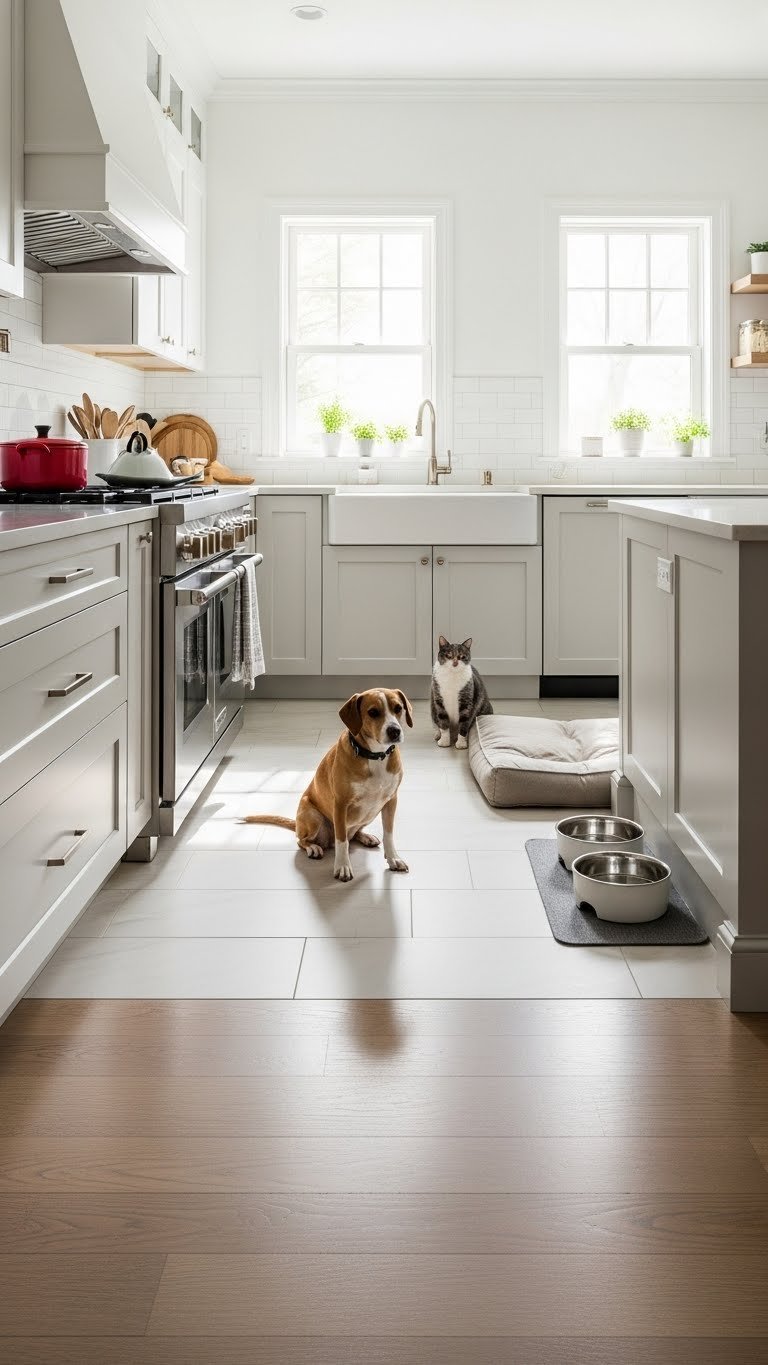
While modern kitchens are designed for human comfort, pet owners increasingly seek spaces that accommodate their furry companions without compromising style or functionality.
You’ll want to prioritize pet-friendly flooring like scratch-resistant tiles or sealed hardwood and choose safe kitchen materials that resist stains and can withstand playful paws.
Strategic design guarantees harmony between your pet’s needs and your aesthetic vision.
Maximize Storage With Vertical Cabinetry
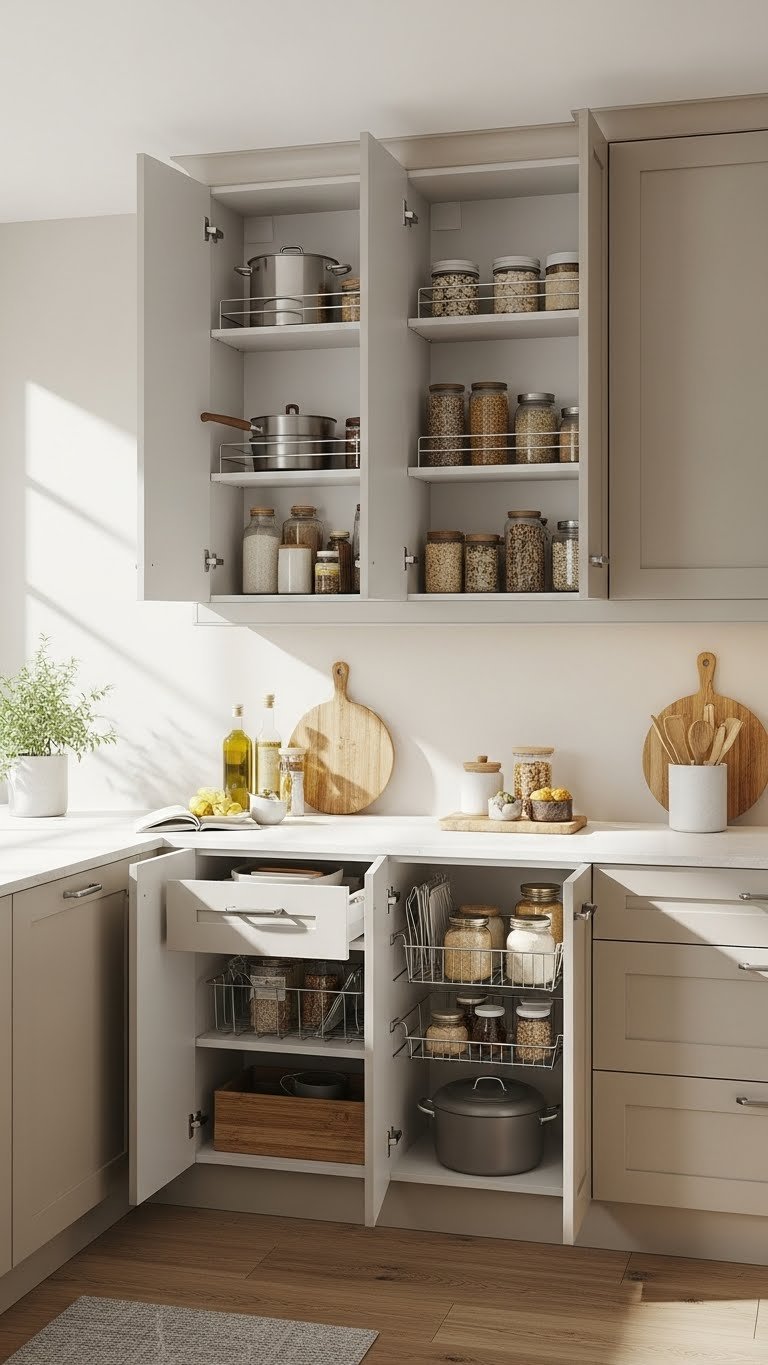
Because kitchen storage often feels like a perpetual challenge, vertical cabinetry emerges as a sophisticated solution for modern homeowners seeking maximum organizational efficiency.
You’ll find that innovative cabinetry styles maximize vertical storage, transforming unused wall space into sleek, functional areas that elevate your kitchen’s aesthetic while providing ample room for cookware, pantry items, and culinary essentials.
Mix Materials for Textural Richness
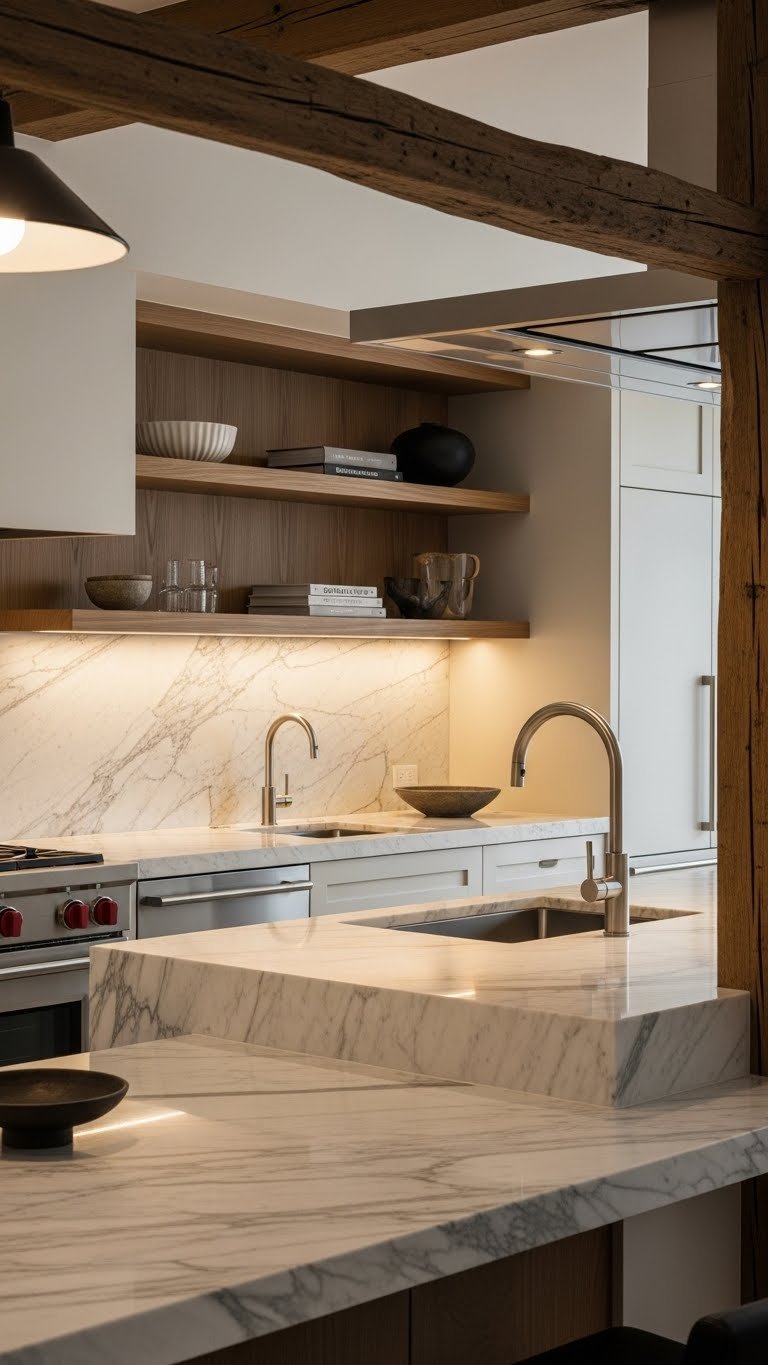
Although kitchen design trends continuously evolve, material layering has emerged as a pivotal strategy for creating visually dynamic and tactically sophisticated spaces.
You’ll want to blend wood accents with sleek metal finishes, creating depth and visual interest.
Combining contrasting textures like smooth marble countertops and rough-hewn wooden shelving can transform your kitchen into a sensory masterpiece.
Choose Timeless Backsplash and Color Schemes
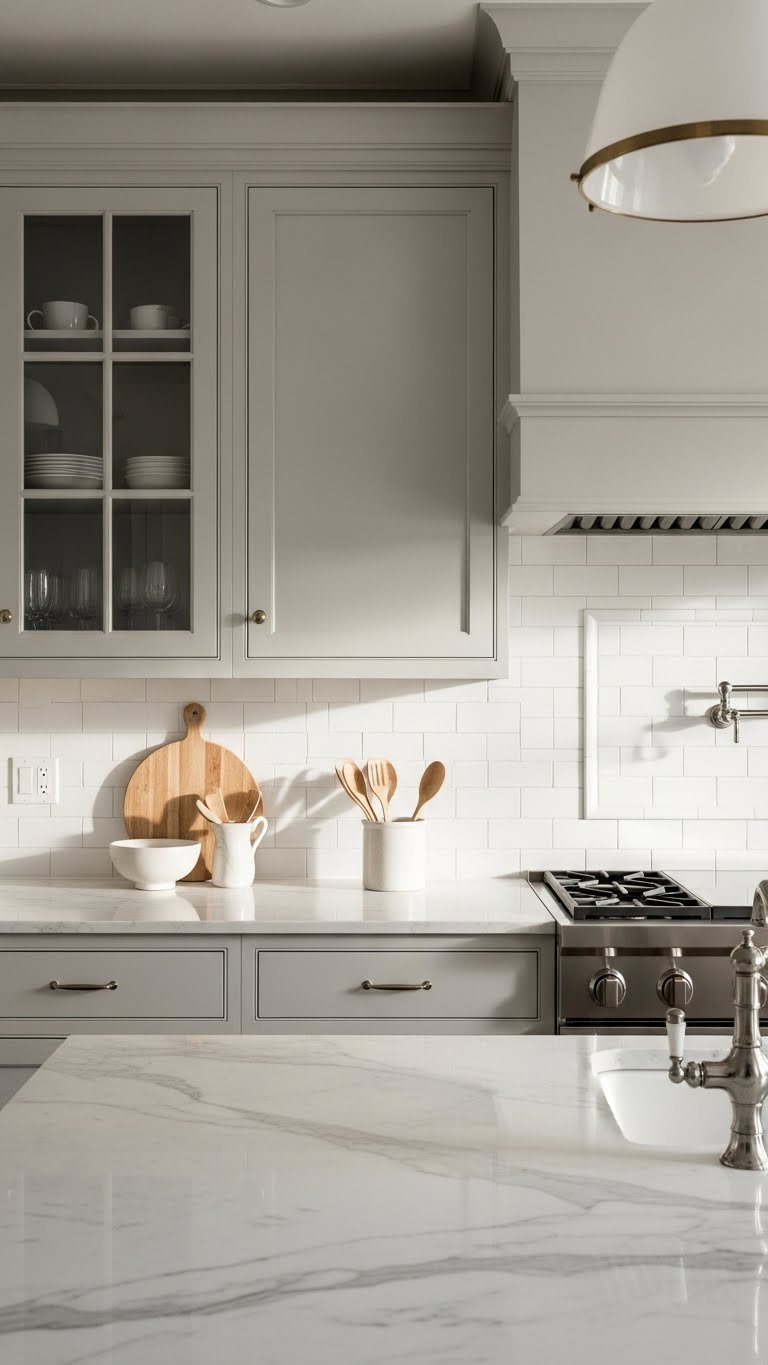
Material interplay sets the stage for another critical design element: your kitchen’s color and backsplash selection.
You’ll want timeless materials that reflect color psychology—neutral tones like soft grays and warm whites create calm, while subway tiles and marble offer enduring elegance.
Your choices should feel both sophisticated and liberating, transforming your space with understated confidence.
Implement Adaptable Modular Kitchen Systems
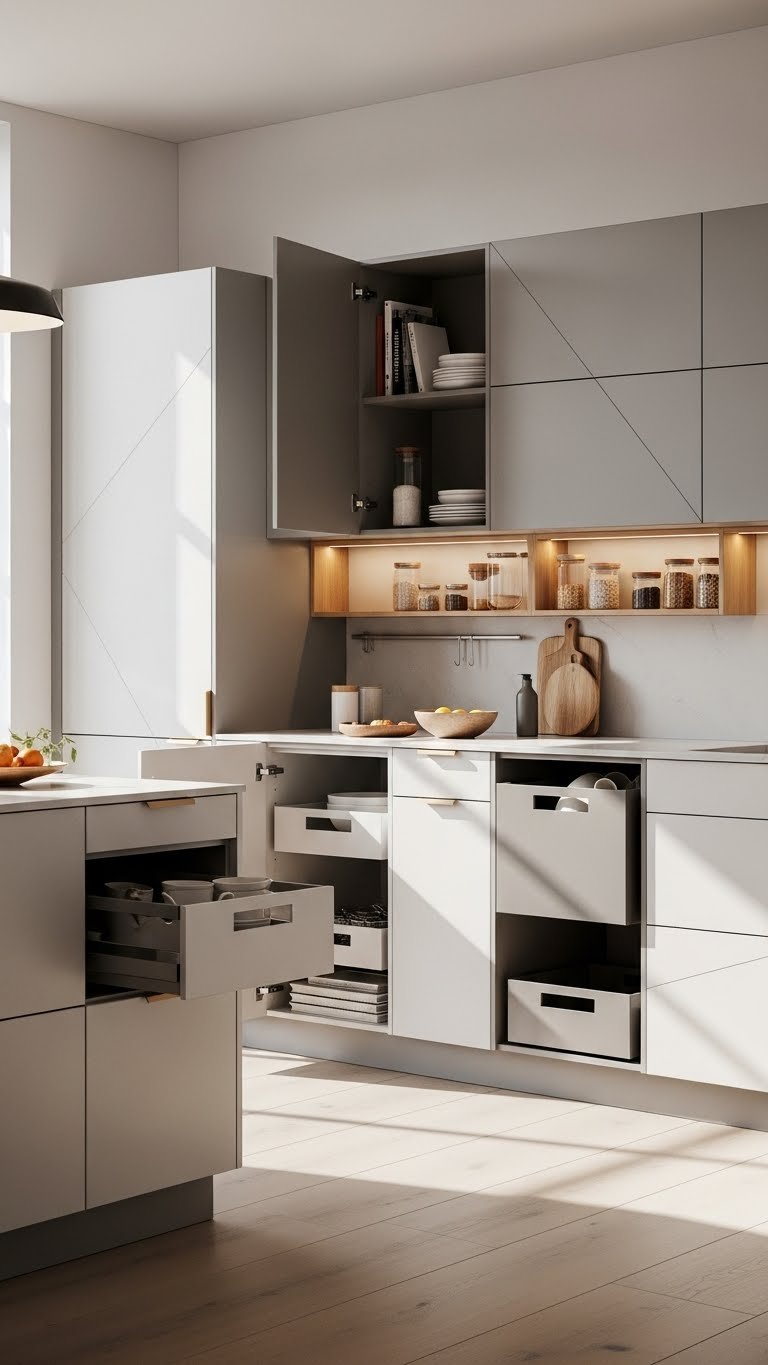
When designing modern kitchens, modular systems represent the pinnacle of flexible functionality and contemporary aesthetics.
You’ll love how adaptable kitchen systems allow you to customize your space effortlessly.
Modular kitchen components let you reconfigure layouts, swap storage solutions, and create a dynamic cooking environment that evolves with your lifestyle and design preferences.
Curate Display Spaces Effectively

Beyond modular configurations, strategic display spaces transform kitchens from purely functional areas into personalized design statements.
You’ll want to integrate display shelving that showcases your culinary personality.
Select decorative accents like artisan ceramics, vintage cookbooks, or curated glassware that reflect your style, turning open kitchen surfaces into dynamic visual narratives that elevate your space’s aesthetic potential.
Leave a Reply